

Buda Castle Ticket Prices in 2026: Every Option Explained
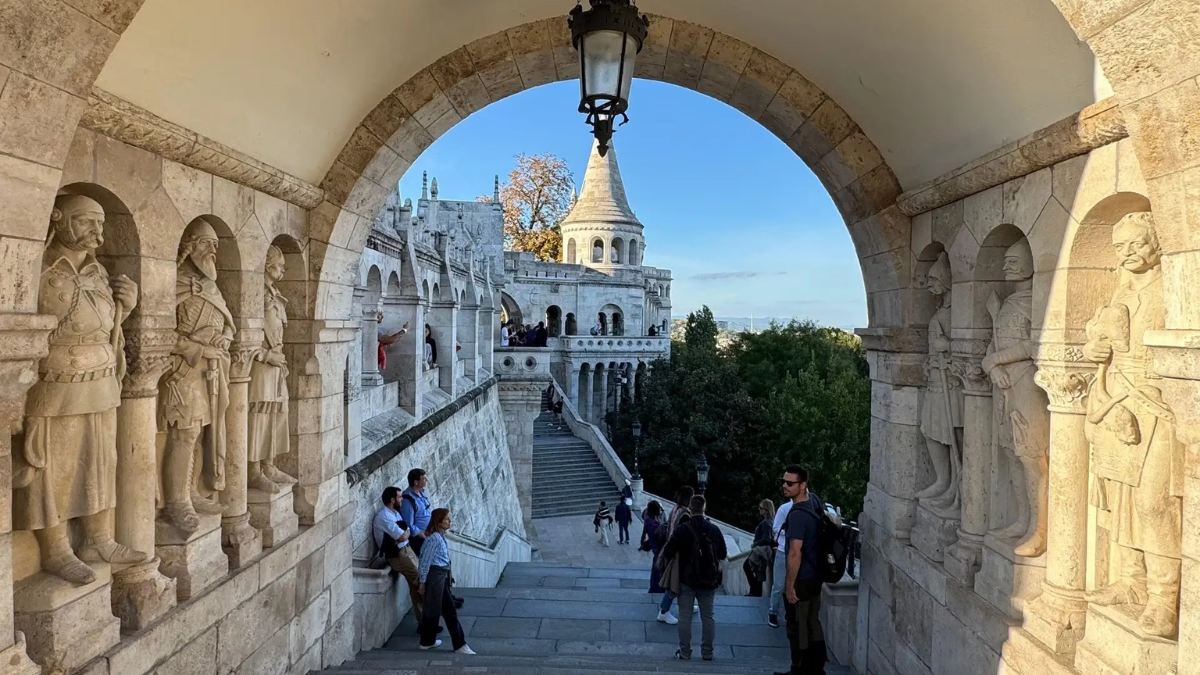
There is no single “Buda Castle ticket.” The courtyards, terraces, and viewpoints are free and open 24/7. Inside the palace, the Hungarian National Gallery costs around HUF 3,800 (about €10), the Budapest History Museum around HUF 3,000, and Saint Stephen’s Hall is seen only on a guided tour priced from about €28. Prices are set in forint and shift with the exchange rate, so treat euro figures as approximate.
The most common source of confusion at Buda Castle is that it isn’t one ticketed attraction — it’s a hilltop complex where the outdoor space is public and free, but several separate institutions inside charge their own admission. First-time visitors sometimes assume they need a single “entry ticket” to walk onto the terraces, and they don’t; then they’re surprised that the museums inside each have their own price, their own hours, and in one case (Saint Stephen’s Hall) no walk-in ticket at all.
This guide breaks down exactly what costs money at Buda Castle in 2026, what’s free, how reduced and family rates work, where to buy safely, and how to avoid overpaying.
Price Overview: What Costs What in 2026
The grounds are free. Paid admission applies only to the Hungarian National Gallery (~HUF 3,800 / ~€10), the Budapest History Museum (~HUF 3,000), and Saint Stephen’s Hall (from ~€28 via a guided tour). The National Széchényi Library operates on its own terms and isn’t a typical tourist ticket.
| What | 2026 Price (adult) | Approx. EUR | How It’s Sold |
|---|---|---|---|
| Grounds, courtyards, terraces & viewpoints | Free | Free | No ticket needed, open 24/7 |
| Hungarian National Gallery | ~HUF 3,800 | ~€10 | Ticket office or official website |
| Budapest History Museum (Castle Museum) | ~HUF 3,000 | ~€8 | Ticket office or official website |
| Saint Stephen’s Hall | No standalone walk-in ticket | From ~€28 | Guided tour only, booked in advance |
| National Széchényi Library | Varies by service | — | Reading-room / research access, not general sightseeing |
Forint figures come from the official venues and are the prices that actually apply at the till; the euro conversions are approximations that move with the exchange rate, which matters most when you’re budgeting from abroad or comparing a HUF price to a euro-denominated tour listing. Always treat the HUF figure as the authoritative one and the euro figure as a rough guide.
The Palace Grounds Are Free
You never need a ticket to walk the Buda Castle courtyards, terraces, or viewpoints. They’re public space, open around the clock, and cost nothing regardless of nationality, age, or season.
This is worth repeating because it’s the single most useful fact for budgeting a visit: the sweeping terraces over the Danube, the Matthias Fountain, the ornamental gates, and the courtyards between the museum buildings are all free, always. You can spend a full morning at Buda Castle — photographing the views, walking the grounds, admiring the exterior architecture — and pay nothing at all. Paid tickets only come into play the moment you want to step inside one of the buildings. For a fuller rundown of what sits behind each door, see our overview of what’s inside Buda Castle, and for the museums’ opening days and Monday closures, see Buda Castle opening hours.
Hungarian National Gallery Tickets
The Hungarian National Gallery, the largest collection inside the palace, costs around HUF 3,800 (roughly €10) for a standard adult ticket in 2026. It’s closed Mondays, and reduced-price and free categories apply to students, seniors, children, and some EU-resident groups.
The National Gallery is the biggest single draw inside Buda Castle, housing centuries of Hungarian painting and sculpture across multiple floors of the former royal palace. A standard adult ticket runs about HUF 3,800 (roughly €10), which typically covers the permanent collection; temporary exhibitions are sometimes priced separately or bundled into a combined ticket, so check what’s included when you buy. Tickets are sold at the on-site counter and through the gallery’s official website, and buying online in advance is worth it in peak season to skip the queue. See our full Hungarian National Gallery guide for what’s actually on display and whether it fits your interests.
Budapest History Museum Tickets
The Budapest History Museum (the Castle Museum) costs around HUF 3,000 for a standard adult ticket, covering the medieval palace remains and the history of the city and the castle across the centuries.
Housed in the south wing of the palace, the Budapest History Museum tells the story of the site itself — from the medieval royal residence through the sieges that repeatedly leveled it. A standard adult ticket runs about HUF 3,000, a little less than the National Gallery, and often includes access to the excavated medieval chambers that are one of the museum’s highlights. Winter hours tend to be shorter here, so double-check the schedule before you plan a late-afternoon visit. Our dedicated guide to the Budapest History Museum at Buda Castle covers what’s inside room by room.
Saint Stephen’s Hall: Guided Tour Pricing
Saint Stephen’s Hall has no standalone walk-in ticket. The only way to see the restored royal hall is on a timed guided tour, priced from about €28 in 2026, which also includes a walk through the palace grounds.
Saint Stephen’s Hall is the exception to how the rest of Buda Castle’s tickets work. There’s no ticket window where you can simply pay to walk in — access is limited to guided tours with a set time slot, priced from around €28 per person. That price typically bundles a roughly hour-long walk through the castle grounds with about 30 minutes inside the reconstructed hall, a live guide, and headsets. Because these tours are sold through international booking platforms rather than a simple museum till, prices are usually quoted directly in euros rather than forint, and they can shift with demand and season. If the restored hall is a priority for your visit, our full Buda Castle with Saint Stephen’s Hall Tour review covers what’s included, the meeting point, and whether it’s worth it.
National Széchényi Library
The National Széchényi Library, also housed within the palace, is a working research library rather than a typical sightseeing stop, and it doesn’t fit the museum-ticket model of the Gallery or the History Museum. General reading-room access, registration requirements, and any fees differ from a standard admission ticket and are set by the library itself on its own weekday-and-Saturday schedule. Unless you have a specific research reason to visit, most travelers can skip it — the library isn’t part of a typical Buda Castle sightseeing itinerary, and its interior isn’t set up for casual visits the way the Gallery and History Museum are.
Tour Prices: Cave Tour, Walking Tours & Hill Tour
Beyond museum admission, several guided tours cover Buda Castle and its surroundings — the underground cave network, walking tours of the grounds, and combined hill tours that add Fisherman’s Bastion and Matthias Church. Prices vary by provider, group size, and season, so check the current rate on each tour’s own page.
If you’d rather explore with a guide than navigate museum tickets on your own, several tour products cover different angles of Castle Hill:
| Tour | What It Covers | Where to Check Current Price |
|---|---|---|
| Cave Tour | The underground labyrinth and caves beneath Castle Hill | [Buda Castle Cave Tour review](https://budacastle-guide.com/tickets/buda-castle-cave-tour/) |
| Small Group Walking Tour | The palace grounds and exterior highlights on foot | [Small Group Walking Tour review](https://budacastle-guide.com/tickets/buda-castle-small-group-walking-tour/) |
| Castle Hill Tour | Buda Castle plus Fisherman’s Bastion and Matthias Church | [Castle Hill Tour review](https://budacastle-guide.com/tickets/buda-castle-hill-tour-fishermans-bastion-matthias-church/) |
| Saint Stephen’s Hall Tour | The only way inside the restored royal hall | From ~€28 (see section above) |
These tours are sold separately from museum admission — booking a walking tour doesn’t get you into the National Gallery, and a cave tour doesn’t include the History Museum. Prices on these products move with demand, so it’s worth checking the current figure on the specific tour’s page rather than assuming a fixed rate.
Reduced, Student, Family & Senior Rates
The National Gallery and History Museum both offer reduced tickets for students, seniors, and children, with some categories — often for children under a certain age or people with disabilities and a companion — free. Several discount categories are restricted to EU/EEA citizens or Hungarian residents, so non-EU visitors should check which reductions actually apply to them before assuming a discount.
Like most Hungarian state museums, the Gallery and History Museum offer a tiered pricing structure rather than one flat adult rate:
- Students and seniors with valid ID typically qualify for a reduced ticket at both museums, usually well below the standard adult price.
- Young children are often admitted free up to a certain age, with the exact cutoff set by each institution.
- Visitors with disabilities and an accompanying companion are commonly admitted free or at a reduced rate.
- Family tickets covering two adults and children may be available at a combined discount, though not every institution offers this option year-round.
- EU/EEA nuance: some reduced or free categories at Hungarian state museums are limited to EU/EEA citizens or Hungarian residents specifically, while non-EU visitors pay the standard adult rate even where a domestic discount exists. This is a common rule at Hungarian national institutions, so if you’re traveling from outside the EU, don’t assume a “student” or “senior” listing applies to you without checking the fine print at the ticket counter or on the official page.
Because exact reduced prices and eligibility rules can change and differ between the Gallery and the Museum, always confirm the current categories and required ID on the official ticketing page before you travel. For a fuller breakdown of who qualifies for free or discounted entry across Castle Hill, see our guide to Buda Castle free entry and discounts.
Forint vs Euro: Why the Price You See May Shift
Hungarian museums set their official prices in forint (HUF), not euros. Euro figures quoted online, including in this guide, are approximate conversions that move with the exchange rate, so the amount charged to your card can differ slightly from what you budgeted.
Hungary uses the forint, and that’s the currency the National Gallery and Budapest History Museum actually charge in — the euro prices you see on travel sites, including this one, are estimates for planning purposes, not fixed rates. A ticket priced at HUF 3,800 might work out to slightly more or less than €10 depending on the day’s exchange rate. Tours booked through international platforms, like the Saint Stephen’s Hall tour, are often priced directly in euros for convenience, which sidesteps the conversion but means you’re paying whatever rate the platform has set rather than the day’s bank rate. If you’re paying by card at a Hungarian till, be aware that some card readers offer “dynamic currency conversion” — the option to be charged in your home currency instead of forint — and this usually comes at a worse rate than letting your own bank convert HUF normally. Choosing to pay in forint at the terminal is typically the better deal.
Where to Buy: Official Sites vs Resellers
For the National Gallery and Budapest History Museum, buying directly from the museum’s official website or ticket counter gets you the standard price with no markup. For Saint Stephen’s Hall, and for guided tours generally, reputable booking platforms are the normal route since no walk-in ticket exists — just avoid unofficial resellers charging inflated prices for something you could otherwise buy at face value.
- Museum admission (National Gallery, History Museum): buy directly from the official museum website or the on-site ticket counter. These are straightforward, fixed-price tickets, and there’s no practical benefit to paying a markup through a third-party reseller for something you can buy at face value on arrival — though buying online in advance can still save you a queue in high season.
- Saint Stephen’s Hall and guided tours: since there’s no walk-in ticket for the hall, booking through an established platform is the normal and reliable route, not a markup to avoid. Stick to well-known booking sites and read exactly what’s included (grounds walk plus hall, guide language, group size) before paying.
- Watch for lookalike sites: as with most popular attractions, unofficial third-party sites sometimes charge more than the official museum price for the same basic admission, occasionally without making clear that it isn’t a special or exclusive product. If a “skip-the-line” or “priority” ticket for the Gallery or History Museum costs noticeably more than the official rate, weigh whether the convenience is actually worth the premium — our guide to Buda Castle skip-the-line tickets walks through when that’s worth paying for and when it isn’t.
Passes: Budapest Card & Budapest Pass
City passes like the Budapest Card or Budapest Pass bundle multiple attractions and transit into one purchase, and some include or discount Buda Castle sights. Whether one saves you money depends entirely on how many paid attractions you’ll actually visit — for a castle-only trip, standalone tickets are usually simpler and cheaper.
If Buda Castle is one stop among many on your Budapest itinerary, a city pass can be worth comparing against buying tickets individually. These passes typically bundle public transit and discounted or included entry to a rotating list of museums and attractions, and coverage of the Gallery, History Museum, or Saint Stephen’s Hall tour varies by pass and can change, so check the current inclusion list before assuming it covers what you want to see. The math generally only works in your favor if you’re visiting several paid attractions across a day or two — for a castle-focused half-day trip, buying the National Gallery and History Museum tickets separately is usually simpler and no more expensive. Our detailed comparisons — Budapest Pass Review and Budapest Card vs Standalone Buda Castle Tickets — break down exactly what each pass includes and when it pays off.
Combined Tickets & How to Save
Museums inside Buda Castle occasionally offer combined tickets covering more than one exhibition or venue at a modest discount over buying separately; availability changes, so check the official ticketing page for the current options rather than assuming a bundle exists on your travel dates. Beyond combined tickets, a few practical ways to keep costs down:
- Lean on the free grounds. A satisfying visit to Buda Castle is possible without paying for anything — budget your ticket money for the one or two interiors that matter most to you rather than trying to see everything.
- Pick one museum over both, if budget is tight. The National Gallery suits art lovers; the History Museum suits those more interested in the palace’s own past. Reading our guides to each can help you choose rather than paying for both out of habit.
- Book Saint Stephen’s Hall ahead. Because it’s guided-tour-only with limited time slots, waiting until you’re on Castle Hill risks the day’s slots selling out, especially in summer.
- Use reduced categories honestly and with ID. Student, senior, and child discounts add up quickly for families and groups — bring the ID that proves eligibility.
- Pay in forint, not your home currency, at card terminals, to avoid a worse dynamic-conversion rate.
- Compare a city pass only if you’re doing a lot. If Buda Castle is one of many paid stops on your trip, run the numbers on the Budapest Card or Budapest Pass; if it’s your main event, standalone tickets are usually easiest.
Frequently Asked Questions
Is it free to enter Buda Castle?
Yes, for the grounds. The courtyards, terraces, and viewpoints are free and open 24/7. You only pay to enter the Hungarian National Gallery, the Budapest History Museum, or to join the guided tour that includes Saint Stephen’s Hall.
How much does a Buda Castle ticket cost in 2026?
There’s no single “Buda Castle ticket.” The Hungarian National Gallery costs around HUF 3,800 (about €10), the Budapest History Museum around HUF 3,000, and Saint Stephen’s Hall is seen only via a guided tour priced from about €28. Prices shift with the exchange rate and season.
Do I need a ticket to see the castle grounds and views?
No. The courtyards, terraces, and panoramic viewpoints over the Danube are public space with no ticket required, any time of day or night.
Is Saint Stephen’s Hall included in the National Gallery or History Museum ticket?
No. Saint Stephen’s Hall is a separate, guided-tour-only experience and isn’t bundled into either museum’s standard admission. You need to book the dedicated tour to see it.
Are prices in forint or euros?
Hungarian museums set their official prices in forint (HUF). Euro figures, including those in this guide, are approximate conversions that move with the exchange rate, so treat them as estimates rather than fixed prices.
Are there discounts for students, families, or seniors?
Yes, at both the National Gallery and the History Museum, students and seniors typically get reduced tickets, and young children are often admitted free. Some discount categories are limited to EU/EEA citizens or Hungarian residents, so non-EU visitors should confirm eligibility before assuming a discount applies to them.
Where should I buy Buda Castle tickets?
For the National Gallery and History Museum, buy directly from the official museum website or the on-site ticket counter to get the standard price. For Saint Stephen’s Hall and other guided tours, book through an established platform, since no walk-in ticket exists for the hall.
Is the Budapest Card or Budapest Pass worth it for Buda Castle?
It depends on how much else you’re doing. If Buda Castle is one of several paid attractions on your trip, a city pass can save money; if it’s your main destination, buying tickets individually is usually simpler and cheaper. Compare the current inclusions before deciding.
Can I buy a combined ticket for the National Gallery and the History Museum?
Sometimes — combined tickets covering more than one venue occasionally exist at a modest discount, but availability changes. Check the official ticketing page for what’s currently on offer rather than assuming a bundle applies to your dates.
What’s the best way to save money on Buda Castle tickets?
Enjoy the free grounds fully, choose the one or two paid interiors that matter most to you rather than everything, book Saint Stephen’s Hall ahead since slots are limited, use valid ID for student/senior/child discounts, and pay in forint rather than your home currency at card terminals.
