

Hungarian National Gallery at Buda Castle: Highlights & Tips
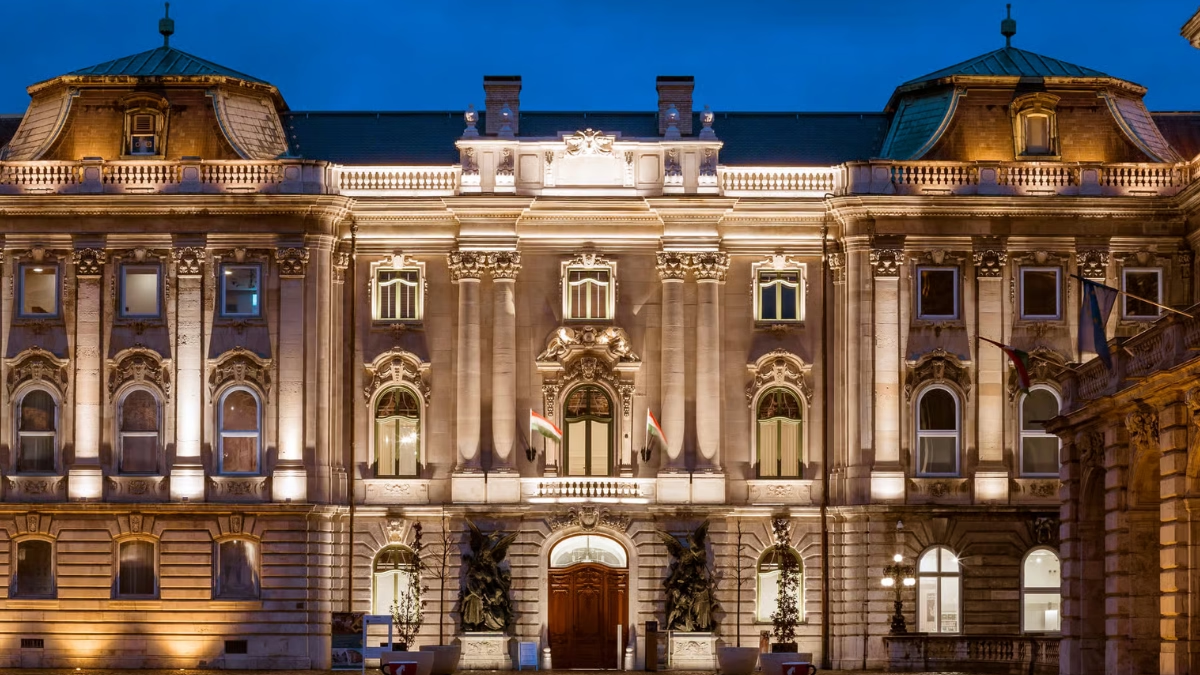
The Hungarian National Gallery is the country’s national art museum, filling several wings of the former royal palace at Buda Castle (commonly referred to as Buildings A through D, joined under the palace’s central dome). It holds Hungary’s largest collection of Hungarian fine art, spanning medieval winged altarpieces through 19th- and early 20th-century painting by names like Munkácsy, Csontváry, Rippl-Rónai and Szinyei Merse. Set aside 2 to 3 hours; the museum runs Tuesday to Sunday, 10 AM to 6 PM (closed Mondays), and admission is around HUF 3,800.
Of everything ticketed inside Buda Castle, the Hungarian National Gallery is the reason most visitors climb the hill in the first place. It’s the single largest collection of Hungarian art anywhere, and it occupies a genuinely impressive share of the palace — several connected wings and floors, capped by the building’s central dome. Unlike the free courtyards and terraces around it, this is a paid, indoor museum with set hours, so it needs its own plan rather than a quick walk-through.
This guide covers what’s actually inside, floor by floor, the pieces worth slowing down for, how long to budget, and the practical details — hours, tickets, photography and where to grab a break — so you can decide how much of your Buda Castle time to give it.
What Is the Hungarian National Gallery?
The Hungarian National Gallery is Hungary’s national collection of Hungarian fine art, established in the 20th century and housed inside the Buda Castle palace complex rather than in a purpose-built museum building. It’s separate from the Budapest History Museum next door, which covers the building’s own history and archaeology rather than art.
The Gallery holds the definitive survey of Hungarian art: sculpture, panel painting, and canvases produced by Hungarian artists (or made for Hungarian patrons) from the Middle Ages onward, brought together after the Second World War into a single national collection and given a permanent home in the rebuilt royal palace. It fills most of the palace’s southern and central wings — commonly described as Buildings A through D — connected internally, with the museum’s most recognizable feature, the great dome at the heart of the complex, rising above the collection.
It’s worth being clear about what this is not: it’s not the same ticket as the Budapest History Museum (which covers the palace’s own history, the medieval royal residence, and archaeological finds), and it’s a completely separate, paid experience from the free grounds, courtyards and viewpoints outside. Our overview of what’s inside Buda Castle breaks down how all the ticketed sites relate to each other and to the free public space around them.
Layout by Floor: What’s Where
The collection is arranged roughly by period as you move up through the building, which makes it easy to focus on one era if you’re short on time.
- Ground floor — stone carving and Gothic wood sculpture, including a lapidarium of architectural fragments, some of them recovered from the palace’s own medieval and Renaissance past.
- First floor — the core of the medieval and early modern collection: large Gothic winged altarpieces, panel paintings, and the Renaissance and Baroque galleries.
- Second floor — 19th- and early 20th-century Hungarian painting, from Romantic and academic history painting through Realism, plein-air work, and the turn-of-the-century modernists. This is where most people spend the bulk of their time.
- The dome — a stairway off the upper floors leads up into the palace’s central cupola, used as a viewing point over the building and the city. Access here can be limited or seasonal (sometimes closed for restoration or during quieter winter months), so treat it as a bonus rather than something to build your whole visit around, and don’t be surprised if it’s temporarily unavailable.
Signage inside is generally clear, and free floor plans are usually available near the entrance — worth picking up on your way in rather than trying to navigate from memory.
Highlights & What Not to Miss
The three things worth prioritizing are the medieval winged altarpieces on the first floor, the 19th-century galleries built around Munkácsy, Csontváry, Rippl-Rónai and Szinyei Merse, and — if it’s open — the dome viewpoint. Together they cover roughly 500 years of Hungarian art in a manageable route.
Medieval and Gothic Winged Altarpieces
This is the collection’s quiet showstopper. The Gallery holds one of the best surviving groups of late Gothic winged altarpieces in Central Europe, carved and painted for churches across the historic Kingdom of Hungary (many from towns in what’s now Slovakia). These are large, elaborate works — carved wooden figures inside painted wings that could be opened and closed depending on the church calendar — and seeing several of them together in one room gives a sense of just how sophisticated Hungarian religious art was before the Ottoman era swept most of it away. It’s easy to walk past this room quickly on the way to the more famous 19th-century galleries; don’t.
Renaissance and Baroque Hungarian Art
The Renaissance galleries include fragments connected to the court of King Matthias Corvinus, whose 15th-century palace on this same hill was one of the great Renaissance centers north of Italy, along with Baroque-era painting and sculpture from the centuries of rebuilding that followed the recapture of Buda from the Ottomans in 1686. It’s a smaller, more specialist section than the Gothic or 19th-century rooms, but it connects directly to the history of the building you’re standing in.
The 19th-Century Greats
This is the section most visitors come for. Mihály Munkácsy, Hungary’s best-known 19th-century painter, is represented by dramatic, large-format canvases and his moody, realist genre scenes — the kind of work, connected to Hungary’s founding history and to everyday 19th-century life, that made him internationally famous in his own lifetime. Tivadar Csontváry Kosztka, a visionary painter often compared to van Gogh, gets a selection of his intense, symbol-laden landscapes. József Rippl-Rónai brings a completely different mood: decorative, Post-Impressionist interiors and portraits shaped by his years in Paris. And Pál Szinyei Merse‘s luminous plein-air scenes, including his best-known picnic scene, are usually cited as the moment Hungarian painting caught up with open-air Impressionism. If you only see one room properly, make it this one.
The Dome: A Different Kind of Highlight
The cupola at the center of the palace, above the collection, is sometimes opened as a viewing point with panoramic views over the building’s roofline and out across the Danube and Pest. It’s not always accessible — hours and availability can be limited, seasonal, or suspended for maintenance — so ask at the entrance whether it’s open on the day you visit rather than assuming. If it’s closed, the free terraces just outside the museum still deliver excellent views at no extra cost; our guide to Buda Castle’s grounds and viewpoints covers the best spots.
How Long to Spend Inside
Budget 2 to 3 hours for a proper visit that covers the medieval altarpieces and the 19th-century galleries without rushing. An hour is enough for a fast highlights-only pass through the second-floor painting galleries alone, while art lovers who want to see everything — including the Renaissance, Baroque and sculpture rooms — can easily fill half a day. If you’re combining the Gallery with other sights on Castle Hill, our guide on how long to spend at Buda Castle helps you plan a realistic itinerary.
Hours, Tickets and Getting In
The Hungarian National Gallery is open Tuesday to Sunday, 10 AM to 6 PM, and closed on Mondays. A standard adult ticket runs around HUF 3,800 (roughly €10), with last entry typically 30 to 60 minutes before closing.
The Gallery keeps standard museum hours: Tuesday through Sunday, 10 AM to 6 PM, with the doors shut on Mondays (it sometimes opens on holiday Mondays as an exception). Winter hours can run shorter, so if you’re visiting between November and February, it’s worth confirming the current schedule before you climb the hill — see our full breakdown of Buda Castle’s opening hours for the seasonal picture across all the ticketed sites.
A standard adult ticket costs roughly HUF 3,800 (around €10), though prices are set in forint and shift with the exchange rate, and reduced rates typically apply for students, seniors and children. Tickets are sold at the entrance and generally online in advance, which is worth doing in peak season to skip the queue. Note that there’s no single combined “Buda Castle” ticket — the Gallery, the Budapest History Museum, and Saint Stephen’s Hall are booked separately. Our guide to Buda Castle ticket prices lays out every option side by side, including where discounts and passes apply.
Photography
Photography without flash is generally allowed in the permanent collection for personal, non-commercial use, but rules can vary by room and are stricter (sometimes banned outright) in temporary exhibitions. Tripods and selfie sticks are typically not permitted. Policies do change, so check the signage at the entrance and in individual galleries rather than assuming blanket permission.
Café and Breaks
There’s an on-site café where you can pause partway through, useful given how much ground the collection covers — a genuine break helps more than pushing through all three floors in one go, especially with kids or if your feet are already feeling the cobblestones from the rest of Castle Hill.
What Not to Miss: A Quick Checklist
- The Gothic winged altarpiece room on the first floor — easy to rush past, worth ten unhurried minutes.
- Munkácsy’s large-scale 19th-century canvases and genre scenes.
- Csontváry’s visionary landscapes.
- Szinyei Merse’s plein-air picnic scene, a milestone in Hungarian painting.
- The dome viewpoint, if it happens to be open on your visit day.
- A stop on the free terraces outside afterward — the view over the Danube is the perfect way to close out the visit, and it costs nothing.
Tips for a Better Visit
Go on a weekday morning soon after the 10 AM opening if you want the 19th-century galleries relatively quiet; they’re the busiest rooms in the building by midday. Wear comfortable shoes — between the museum’s floors and stairs and the cobblestones of Castle Hill outside, this is not a day for new shoes. Pick up (or photograph) a floor plan at the entrance so you’re not backtracking through rooms you’ve already covered. And don’t treat the dome as guaranteed: build your plan around the permanent collection, and treat the cupola as a pleasant surprise if it’s open rather than the main event.
Frequently Asked Questions
What is the Hungarian National Gallery?
It’s Hungary’s national museum of Hungarian fine art, housed inside the Buda Castle palace complex. It covers art from the medieval period through the early-to-mid 20th century, including Gothic winged altarpieces, Renaissance and Baroque works, and major 19th-century painters like Munkácsy and Csontváry.
How is the Hungarian National Gallery different from the Budapest History Museum?
The National Gallery is an art collection, while the Budapest History Museum (also inside the palace) covers the building’s own history and archaeology, including the medieval royal residence. They’re separate museums with separate tickets inside the same complex.
What are the opening hours?
The Gallery is open Tuesday to Sunday from 10 AM to 6 PM and closed on Mondays. It often stays open on holiday Mondays as an exception. Hours can run shorter in winter, so it’s worth confirming ahead of a colder-season visit.
How much does a ticket cost?
A standard adult ticket costs roughly HUF 3,800 (around €10), with reduced rates for students, seniors and children. There’s no combined ticket covering every attraction inside Buda Castle, so the Gallery is booked on its own.
How long should I spend inside?
Budget 2 to 3 hours for a proper visit covering the main highlights without rushing. A fast pass through the 19th-century galleries alone can be done in about an hour, while serious art fans can easily spend half a day across every floor.
What are the must-see highlights?
The Gothic winged altarpieces on the first floor and the 19th-century galleries built around Munkácsy, Csontváry, Rippl-Rónai and Szinyei Merse are the two sections most worth prioritizing. The dome viewpoint, when open, is a worthwhile bonus.
Can I go up into the dome?
Sometimes. The central cupola is occasionally opened as a viewing point, but access can be limited, seasonal, or closed for maintenance. Ask at the entrance on the day of your visit rather than counting on it, and use the free terraces outside as a backup for views.
Is photography allowed?
Photography without flash is generally permitted in the permanent collection for personal use, though temporary exhibitions often restrict it and tripods usually aren’t allowed. Check the signage in each room, since policies can vary and change.
Is the Hungarian National Gallery included in the free Buda Castle grounds?
No. The castle’s courtyards, terraces and viewpoints are free and open 24/7, but the Hungarian National Gallery is a separate, ticketed museum with its own hours. You need a dedicated ticket to go inside.
Is it worth visiting if I’m not an art expert?
Yes — the Gothic altarpieces and the 19th-century Hungarian paintings are visually striking and well worth seeing even without background knowledge, and the building itself, capped by the palace dome, is part of the experience. If you’re tight on time, focus on those two sections rather than trying to see everything.
