

Buda Castle Accessibility Guide: Wheelchairs & Strollers
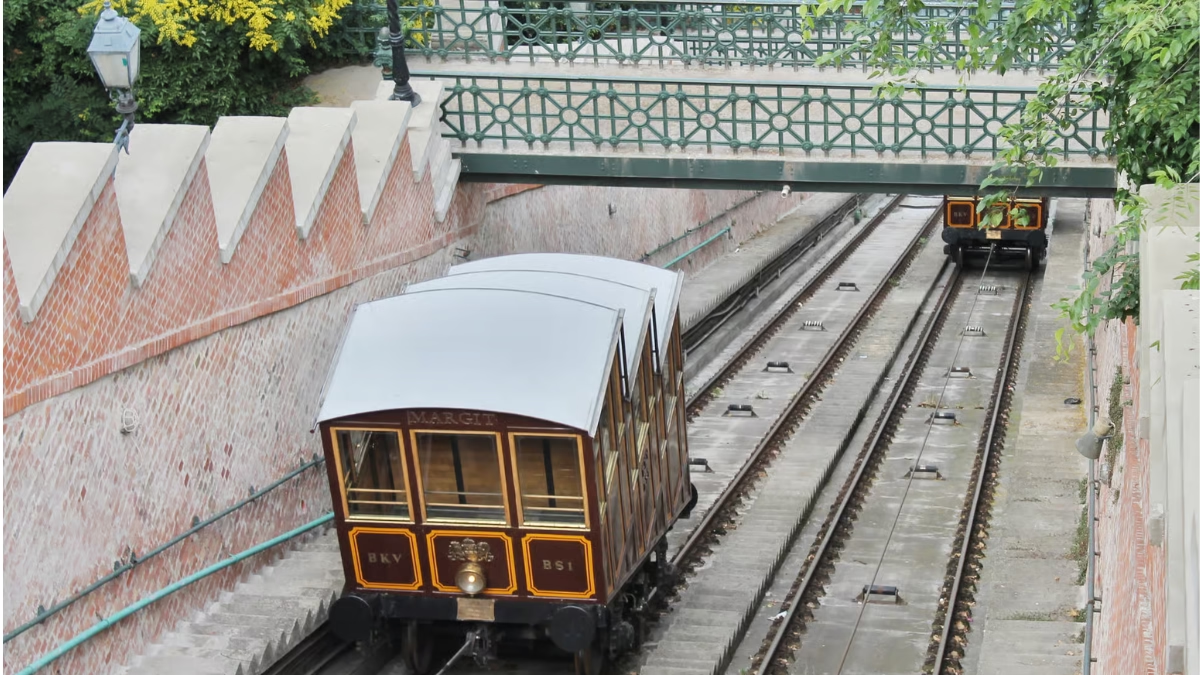
Buda Castle can be visited step-free: the funicular, bus 16, and the Castle Garden Bazaar’s elevators and escalators all reach the top of Castle Hill without stairs. Once up top, expect real cobblestones and some gradient on the approach paths, though the main courtyards and terraces are relatively level. The Hungarian National Gallery and the Budapest History Museum both have lifts and accessible toilets; Saint Stephen’s Hall is reachable by lift on its guided tour.
Buda Castle sits on top of a hill, which understandably worries anyone visiting with a wheelchair, a stroller, or a relative who doesn’t move as easily as they used to. The good news is that you do not have to climb a staircase to get there — there are three step-free ways up. The honest news is that once you arrive, Castle Hill is a real historic hilltop: old cobblestones, some sloped paths, and distances between attractions that add up. This guide walks through what is genuinely easy, what takes planning, and what to expect so you can decide the best way to do it.
Getting Up the Hill Step-Free
The funicular, bus 16 (or 16A/116), and the elevators and escalators inside the Castle Garden Bazaar (Várkert Bazár) on the riverbank all get you to the top of Castle Hill without stairs. The funicular is scenic but has small cabins and can queue; the bus is the most reliably step-free; the Castle Garden Bazaar route is free and often the quietest option.
Three routes avoid stairs entirely.
The funicular (Sikló) runs from Clark Ádám tér, by the Chain Bridge, up to the palace terrace. Its carriages are compact and can fill quickly with other visitors and luggage, so a wheelchair or a large stroller may need to wait for the next car, and boarding involves a small gap and step at the platform that station staff can usually help you across. It is the most scenic option and worth it for the ride alone, but it is not the most spacious.
Bus 16 (and its variants 16A/116) runs from Deák Ferenc tér and Széll Kálmán tér up to Castle Hill on modern, low-floor city buses with a ramp and a dedicated wheelchair space, making it generally the most dependable step-free option of the three, and it is included in a standard Budapest transit ticket rather than a separate fare.
The Castle Garden Bazaar (Várkert Bazár), the restored 19th-century terrace complex on the riverbank below the palace, has elevators and escalators that carry you from the embankment up into the castle gardens and onto the hill, free of charge. This route is less well known than the funicular, tends to be quieter, and is a good backup if the funicular line is long or a cabin is full. From the top of the Bazaar, a short walk on paved paths connects into the palace grounds.
Whichever route you choose, remember that the grounds, courtyards, and terraces of Buda Castle themselves are free and open 24/7 — you are not paying to reach the hill, only for the museums once you are up there. Our guide on how to get to Buda Castle covers all the routes, including driving and walking, in more depth.
Cobblestones and Slopes on Castle Hill
Castle Hill’s streets and courtyards are largely paved in real, sometimes uneven cobblestones, and the approach paths have noticeable gradient in places. This is manageable for most wheelchair users and stroller pushers with care, but it is not flat, smooth pavement, and a companion or a set of good-quality wheels makes a real difference.
This is the part worth being upfront about. Castle Hill is a preserved historic district, and much of its charm comes from cobbled streets, old stone courtyards, and paths that were laid decades or centuries before accessibility was a design consideration. The main palace courtyards near the museums are relatively level and use larger, flatter paving stones, so getting between the National Gallery, the History Museum, and the main terraces is not too demanding. The connecting streets toward Fisherman’s Bastion and the Old Town, however, mix cobblestones with genuine slope, and some stretches are narrow with uneven surfaces underfoot.
For manual wheelchair users, this usually means slower going and, ideally, a second person to help on the rougher sections; power wheelchairs generally cope better but should still expect vibration and occasional tight turns. For strollers, all-terrain or larger wheels handle the cobbles far better than a compact umbrella stroller, and you should expect a bumpier ride than on city sidewalks. None of this makes Buda Castle inaccessible, but it does mean allowing extra time and not expecting the smooth, level surfaces of a modern plaza.
Wheelchair Access Inside the Museums
Both the Hungarian National Gallery and the Budapest History Museum have lifts connecting their floors and accessible toilets on site, so wheelchair users can reach the collections without using stairs. Some historic staircases and older wings may have narrower routes, so it is worth asking staff at the entrance for the accessible route through the current layout.
The Hungarian National Gallery, spread across several floors of the palace’s largest wing, has elevators serving its main exhibition floors and an accessible toilet, and staff at the entrance can point out the lift route to each gallery. The building is a former royal palace rather than a purpose-built modern museum, so a handful of side rooms or historic stairwells may not be lift-served — if a specific gallery matters to you, it is worth asking at the ticket desk on arrival rather than discovering a stair-only room mid-visit. Our guide to the National Gallery’s highlights covers what is inside if you want to plan your route around the collections you most want to see.
The Budapest History Museum (the Castle Museum), which covers the medieval palace and city history, similarly has lift access between its main floors and an accessible toilet. Because part of the museum sits in and around excavated medieval chambers, a few of the lower archaeological areas can involve different floor levels or narrower passages, so again, checking with staff about the current accessible route is the safest approach on the day.
For both museums, accessible toilets are on site rather than requiring a trip elsewhere on the hill, which is a genuine convenience for a multi-hour visit.
Saint Stephen’s Hall Access
Saint Stephen’s Hall (Szent István-terem), the reconstructed royal ceremonial hall, is visited only on a timed guided tour rather than open walk-in entry. The hall is reached by lift as part of the tour route, so wheelchair users can generally join, but because groups move together on a schedule, it is worth contacting the tour operator or booking platform in advance to flag mobility needs and confirm the accessible route for that specific day. Letting them know ahead of time avoids any surprises with group pacing or narrower sections along the way.
Strollers and Prams: What to Expect with Kids
Buda Castle is stroller-friendly in the sense that you never need to carry one up a staircase — the funicular, bus, and Castle Garden Bazaar routes are all step-free — but the cobblestones on the hill itself mean a bumpier ride than a smooth city park. All-terrain or larger-wheeled strollers handle it noticeably better than compact travel strollers.
Families bringing a stroller face the same “up the hill” choices as wheelchair users, with the same trade-offs: the funicular is charming but can be tight with a stroller in a crowded cabin, the bus is roomier and has more space to park a stroller, and the Castle Garden Bazaar elevators are a good quiet alternative. Once on top, the main courtyards near the museums are the easiest ground to cover, while the older lanes toward Fisherman’s Bastion and Matthias Church are cobbled and a little more work to push.
A carrier or sling is worth considering as a backup for very young children, especially if you plan to explore the narrower streets or queue for the funicular at a busy time. If a stroller is essential, budget a bit more time than you would for a flat city walk, and note that most cafés and restaurants on the hill have outdoor or ground-floor seating where a stroller can sit beside the table.
Benches, Rest Spots and Pacing Yourself
Castle Hill has a reasonable number of benches along the main terraces and around the Matthias Fountain and viewpoint areas, particularly where the crowds gather to look over the Danube toward Parliament and Pest. Cafés on the hill, both inside the Castle Garden Bazaar and scattered through the Old Town, offer another obvious place to sit and rest with a drink between sights. Because the museums themselves involve a fair amount of standing and walking between rooms, older visitors or anyone with limited stamina may prefer to see one museum per visit rather than combining the National Gallery and the History Museum back to back — see our guide on how long to spend at Buda Castle for realistic timing.
Parking and Drop-Off for Blue-Badge Visitors
Castle Hill is largely car-restricted, with most of the district closed to general traffic, which is one reason the funicular, bus, and Castle Garden Bazaar routes exist as the main ways up. Designated accessible parking is limited on the hill itself, and rules can change, so if you are driving and hold a blue badge or local equivalent, it is worth checking current access and parking regulations for Castle Hill before your trip rather than assuming general tourist parking rules apply. A taxi or rideshare drop-off near the Castle Garden Bazaar or Clark Ádám tér, followed by the step-free elevator or funicular route, is often more reliable than trying to drive directly onto the hill.
Sensory and Quiet Notes
Buda Castle’s grounds are large and mostly open-air, which helps if crowds or noise are a concern — the terraces and courtyards rarely feel as packed or echoing as an indoor attraction. The busiest, loudest pinch points tend to be the funicular platform and the immediate area around Fisherman’s Bastion at midday, when tour groups converge. Visiting early in the morning or in the early evening, when the grounds are just as open but far quieter, is a good option for anyone sensitive to crowds or noise, and it has the added benefit of softer light for photos. Inside the museums, galleries are generally calm, but temporary exhibitions or school-group visits can add noise on some days.
Tips for Older Visitors
Older visitors without a wheelchair but with reduced stamina or balance concerns benefit from many of the same choices as wheelchair users: take the bus or the Castle Garden Bazaar elevators rather than relying on stairs anywhere, wear sturdy, flat-soled shoes rather than smooth-soled ones given the cobblestones, use a cane or trekking pole if you normally would on uneven ground, and plan to sit down between sights rather than trying to see everything on the hill in one push. Visiting outside peak midday hours also means less jostling on narrow lanes and shorter waits for the funicular or lift. Our first-timer tips guide has more general pacing advice that applies well here.
Frequently Asked Questions
Is Buda Castle wheelchair accessible?
Yes, in the sense that you can reach the hill and the main museums without using stairs. The funicular, bus 16, and the Castle Garden Bazaar’s elevators all avoid steps, and both the Hungarian National Gallery and Budapest History Museum have lifts and accessible toilets. The trade-off is that the historic cobblestones and some sloped paths on the hill are not perfectly smooth.
Can you take a wheelchair on the Buda Castle funicular?
Generally yes, but the cabins are small and can fill up with other passengers, so a wheelchair user may need to wait for a less crowded car. There is a small step and gap at the platform where staff can usually assist. If the funicular line is long, the step-free elevators at the Castle Garden Bazaar are a quieter alternative.
Is there a step-free way up Castle Hill other than the funicular?
Yes, two others. Bus 16 (and 16A/116) uses low-floor buses with ramps, and the Castle Garden Bazaar (Várkert Bazár) on the riverbank has free elevators and escalators up into the castle gardens. Both avoid stairs entirely and are often less crowded than the funicular.
Are the cobblestones a problem for wheelchairs and strollers?
They require some care rather than being a total barrier. The main courtyards near the museums use flatter paving, but the older lanes toward Fisherman’s Bastion and Matthias Church are genuinely cobbled with some slope. Larger wheels handle it better, and a companion helps on the rougher stretches.
Does the Hungarian National Gallery have a lift?
Yes, the Gallery has elevators connecting its main exhibition floors and an accessible toilet on site. A few smaller side rooms in the historic building may only be stair-accessible, so it is worth asking staff at the entrance for the current accessible route.
Can I visit Saint Stephen’s Hall in a wheelchair?
The hall is reached by lift as part of its timed guided tour, and wheelchair users can generally join. Because the tour moves as a group on a schedule, contact the tour operator in advance to confirm the accessible route and flag any needs for that specific time slot.
Is Buda Castle stroller-friendly?
You never need to carry a stroller up stairs, since the funicular, bus, and Castle Garden Bazaar routes are all step-free. Once on the hill, expect a bumpier ride over cobblestones than on flat city pavement, so an all-terrain or larger-wheeled stroller works better than a compact travel model.
Is there accessible parking at Buda Castle?
Castle Hill is largely closed to general traffic, and accessible parking directly on the hill is limited, so check current regulations before driving up. A taxi or rideshare drop-off near the Castle Garden Bazaar or Clark Ádám tér, combined with the step-free elevator or funicular route, is usually more reliable.
Are there benches and places to rest on Castle Hill?
Yes, benches are placed along the main terraces and near the viewpoints over the Danube, and cafés throughout the Old Town and the Castle Garden Bazaar offer more places to sit. Pacing a visit to one museum at a time, with breaks in between, is worth considering for anyone with limited stamina.
Is Buda Castle busy or noisy for sensory-sensitive visitors?
The open-air grounds and terraces are generally calm outside of midday, when tour groups peak around the funicular and Fisherman’s Bastion. Visiting early morning or early evening keeps both crowds and noise levels down while the grounds remain fully open and free.
