

How to Get to Buda Castle: Funicular, Bus, On Foot & Parking
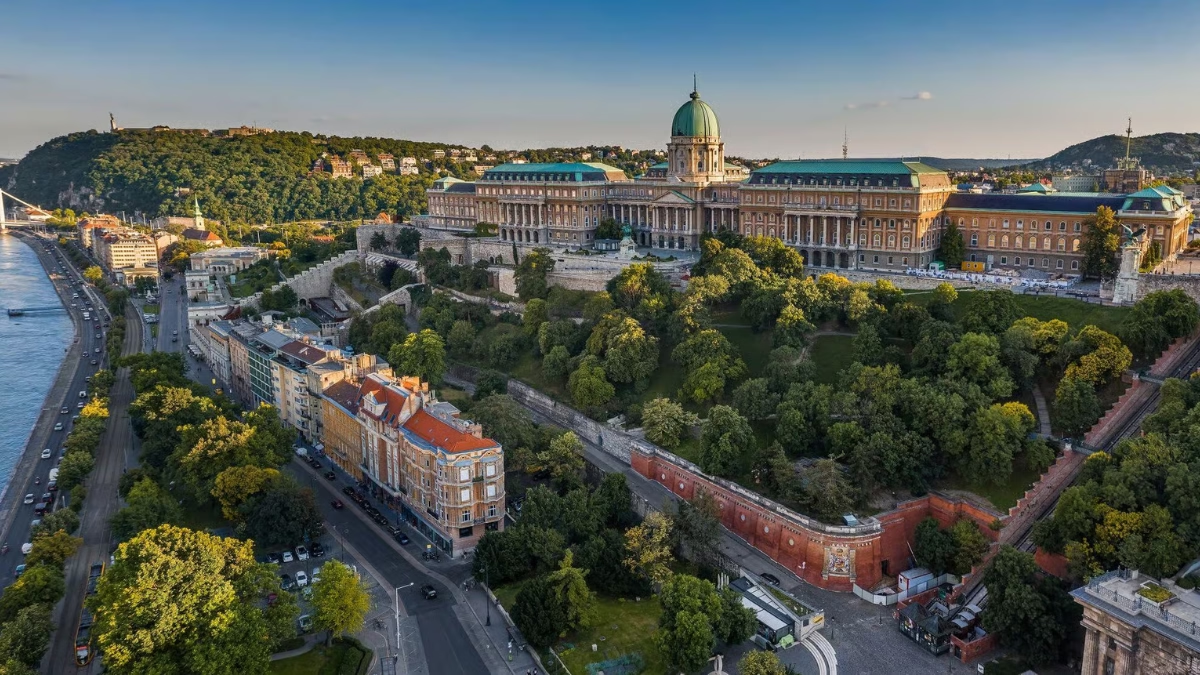
The two easiest ways up Castle Hill are the historic Sikló funicular from Clark Ádám tér, by the Chain Bridge, and bus 16 (or its variants 16A/116) from Deák Ferenc tér or Széll Kálmán tér. Both are quick and step-free. You can also walk up for free — either the steep castle stairs from the Chain Bridge or the step-free escalators and elevators inside the Várkert Bazár — while driving is limited, since Castle Hill is largely closed to private traffic.
Castle Hill sits well above the Danube, so getting there always means going up, one way or another. Which route makes sense for you comes down to how much you want to spend, how much time you have, and how much climbing you’re up for — a family with a stroller, a visitor with limited mobility, and a budget traveler happy to walk will each want a different answer. This guide walks through every option: the funicular, the bus, walking, taxis, driving, and parking, with an honest read on cost, time, and effort for each.
Every Route Up Castle Hill, Compared
The funicular is the fastest and most scenic paid option, bus 16 (or 16A/116) is the most reliable free-transit option, and walking is free but means either a steep staircase or a longer step-free path through the Várkert Bazár. Taxis and driving work but run into Castle Hill’s traffic restrictions once you’re near the top.
| Route | Approx. cost | Time | Effort | Best for |
|---|---|---|---|---|
| Funicular (Sikló) | Paid, small fare | ~3 min ride, plus queue | Minimal; small step at boarding | First-timers, photos, a scenic short ride |
| Bus 16 / 16A / 116 | Standard city transit fare or pass | ~10–15 min from Deák Ferenc tér or Széll Kálmán tér | Minimal; low-floor with ramp | Most dependable step-free option |
| Walk: castle stairs (Chain Bridge) | Free | ~10–15 min uphill | Moderate to high; real staircase | Budget travelers, no mobility concerns |
| Walk: Várkert Bazár escalators/lifts | Free | ~10 min | Minimal; step-free | Free and step-free, often quieter |
| Taxi/rideshare drop-off | Taxi fare | Varies with traffic | Low once dropped off | Luggage, bad weather, limited mobility |
| Drive and park nearby | Parking fee | Varies, plus a short walk | Moderate; no driving onto most of the hill | Visitors arriving by car who plan ahead |
Note the trade-off: the funicular is the most photogenic and takes the least physical effort, but it queues up at peak times and the cabins are small. The bus is nearly as easy and rarely has a line. Walking costs nothing and the Várkert Bazár route is genuinely step-free, but the direct stairs from the Chain Bridge are a real climb. For the full picture on what’s free once you’re up top, see our guide to Buda Castle opening hours, since the grounds themselves are open around the clock regardless of how you arrive.
Getting Oriented: From the Airport and City Center
Budapest Airport (Liszt Ferenc, BUD) sits well outside the city, roughly a 30 to 45 minute drive from Castle Hill depending on traffic, so there is no direct route straight to the top of the hill. Most visitors take a taxi, airport shuttle, or public transit into the city center first, then transfer to one of the routes below for the final leg up Castle Hill. The two natural landing points to aim for are Clark Ádám tér, right by the Chain Bridge on the Buda side (funicular base and a common walking start), and Széll Kálmán tér, a major Buda transit hub on the M2 metro line with direct bus connections up the hill. If you’re staying in Pest, Deák Ferenc tér in the city center is the starting point for bus 16 and an easy walk to the Chain Bridge.
The Funicular (Budavári Sikló)
The Sikló funicular runs daily from about 7:30 AM to 10 PM, though it closes on some Mondays for maintenance, and climbs from Clark Ádám tér at the Buda end of the Chain Bridge straight up to the palace terrace in about three minutes. It’s a paid ride, ticketed separately from standard city transit, and is the most scenic but also the most crowded option at peak times.
The Budavári Sikló is one of the oldest funiculars in Europe and, for many visitors, half the fun of the trip up. Cabins depart from a small station at Clark Ádám tér, right where the Chain Bridge meets the Buda embankment, and climb the hillside on rails in a historic-style carriage with a view back over the Danube toward Parliament and Pest. The ride itself takes only a few minutes, but the funicular is popular, and cabins are small, so expect to queue at midday and on weekends, especially in summer. It runs daily on a schedule of roughly 7:30 AM to 10 PM, with closures on some Mondays for scheduled maintenance — check the current notice board or official site if the funicular ride itself is the point of your visit, since maintenance days aren’t always announced far ahead.
The fare is a small, separate charge from regular Budapest public transit — the Sikló is not covered by a standard BKK transit ticket or pass — with a lower one-way price and a modest premium for a round-trip, plus a reduced children’s rate. Fares can shift, so confirm the current price at the station or on the official site before you go. If the line looks long, remember it isn’t your only option: bus 16 and the free Várkert Bazár route (below) reach the same hilltop.
Bus 16, 16A and 116
Bus 16 runs from Deák Ferenc tér in central Pest, across the Chain Bridge, and up to Castle Hill, while its variants 16A and 116 run from Széll Kálmán tér — reachable via the M2 metro — directly up to the hill. All three use standard low-floor city buses covered by a normal Budapest transit ticket or pass, and they are usually faster and less crowded than waiting for the funicular.
If you already have a Budapest travel card, bus 16 is the most economical way up, and it doubles as the best step-free option of the bunch. From Deák Ferenc tér, one of the city’s central transit hubs in Pest, bus 16 crosses the river near the Chain Bridge and climbs directly to Castle Hill, making it a practical choice if you’re staying in Pest or coming from a metro or tram connection there. From the Buda side, 16A and 116 depart from Széll Kálmán tér, a major interchange on the M2 metro line, and run up to the hill in a matter of minutes — useful if you’re staying in Buda, arriving by metro, or connecting from other bus and tram routes that converge at that square. All of these are ordinary city buses: low-floor, with a ramp and a wheelchair space, and included in a standard single ticket or travel pass rather than requiring a separate fare like the funicular.
Buses drop you near Dísz tér or the Palace’s western approach, a short, mostly level walk from the courtyards and the museum entrances. Compared to the funicular, the bus rarely has a meaningful queue, making it the more reliable choice if you’re on a schedule or visiting at a busy time of day.
Walking Up
You can walk up for free either way: the steep, historic staircase that climbs from the Chain Bridge alongside the funicular line, or the step-free escalators and elevators inside the Várkert Bazár (Castle Garden Bazaar) on the riverbank, which lead into the castle gardens without a single stair. The staircase is a genuine workout; the Várkert Bazár route is flatter and often quieter.
Walking costs nothing, and Castle Hill rewards a slow approach with views that build as you climb. There are two realistic ways to do it.
The castle stairs climb the hillside more or less alongside the funicular line, starting near Clark Ádám tér by the Chain Bridge. It’s a genuine staircase — steep in sections, with a real elevation gain — and takes most walkers 10 to 15 minutes at an unhurried pace. It’s free and direct, but honestly demanding if you’re not used to stairs, traveling with young kids, or carrying luggage.
The Várkert Bazár (Castle Garden Bazaar), the restored 19th-century terrace complex on the embankment below the palace, offers a genuinely step-free alternative. Escalators and elevators inside carry you from the riverside up into the castle gardens and onto the hill at no charge, and from there it’s a short, paved walk into the main grounds. This route is less well known than the funicular or the stairs, tends to be quieter, and is worth remembering as a backup if the funicular line is long.
Either way, remember that once you reach the top, the grounds, courtyards, and terraces are free and open 24/7 — you’re only paying if you go on to buy a museum ticket.
Taxi, Drop-Off and the Car Restriction on the Hill
Taxis and rideshares can drop you close to the top, typically near Clark Ádám tér or the Várkert Bazár, but Castle Hill’s historic core itself is largely closed to general private traffic, so a taxi generally can’t drive you directly to the palace courtyards. Plan on a short walk or the funicular/lift for the last stretch.
A taxi or rideshare is a reasonable option if you have heavy luggage, mobility needs, or simply don’t want to deal with tickets and transfers, but it’s worth knowing its limits. Castle Hill’s old town is largely restricted to residents, permit holders, and authorized vehicles, so a standard taxi drop-off usually happens at the base of the hill — near Clark Ádám tér for the funicular, or near the Várkert Bazár for the step-free elevator route — rather than at the palace itself. From there, the funicular, the Bazár’s lifts, or a short walk cover the final climb. If a driver does have access closer to the top for a specific drop-off, treat that as the exception rather than the rule, and don’t count on a car being able to pull right up to the museum entrances.
Parking Near Castle Hill
Driving to Buda Castle is the least convenient option for most visitors, precisely because of the traffic restriction described above: you generally cannot drive into or park within the historic core of Castle Hill without a local permit. There is a paid parking garage within the district itself near Dísz tér that admits visitors, but access rules, entry points, and availability can change, so confirm current terms before you rely on it. Outside the restricted zone, options are more straightforward: metered street parking in the Watertown (Víziváros) streets below the hill, or public parking garages near Széll Kálmán tér, both followed by the bus or a walk up. If driving is your only option, budget extra time for finding a spot and the walk or transit connection that follows — it rarely ends up faster than simply taking the funicular or bus from a park-and-ride point.
Step-Free and Accessible Routes
Three routes up Castle Hill avoid stairs entirely: the funicular (though its cabins are small and can queue), bus 16/16A/116 on low-floor buses with a ramp, and the Várkert Bazár’s elevators and escalators, which are free. Once on top, the main courtyards near the museums are relatively level, though the older lanes toward Fisherman’s Bastion involve genuine cobblestones and some slope.
If step-free access matters — for a wheelchair, a stroller, or anyone who struggles with stairs — bus 16 or its variants are generally the most dependable choice, since modern low-floor buses with a ramp rarely have the crowding issues the funicular can. The Várkert Bazár elevators are the best free alternative and are often quieter than either the funicular or the bus stop. The funicular itself is step-free at the platform level but has compact cabins that fill quickly, so a wheelchair or large stroller may need to wait for the next car. None of the three requires the direct castle stairs. For a full breakdown of terrain, museum lifts, and rest spots once you’re on the hill, see our dedicated accessibility guide.
Which Route Should You Choose?
For most first-time visitors, the funicular is worth doing at least once for the ride and the view, ideally outside the midday peak to avoid the longest queues. If you’re short on time, already hold a transit ticket, or the funicular line looks long, bus 16 (or 16A/116) will get you there just as fast without the extra fare. If you’re on a tight budget and comfortable with stairs, the free castle staircase from the Chain Bridge does the job; if you’d rather skip the stairs without paying, the Várkert Bazár’s elevators are the free, step-free option most visitors don’t know about. Save the taxi or a car for when luggage, weather, or mobility make it the clearly better call, and expect to finish the last stretch on foot, by lift, or by funicular regardless.
Frequently Asked Questions
What’s the easiest way to get to Buda Castle?
For most visitors, the funicular from Clark Ádám tér near the Chain Bridge is the easiest and most scenic option, though it can queue at busy times. Bus 16 (or 16A/116) is just as easy, usually faster at peak hours, and is covered by a standard transit ticket rather than a separate fare.
How much does the Buda Castle funicular cost?
The Sikló charges a small separate fare, not covered by standard Budapest transit tickets, with a one-way price and a slightly higher round-trip price, plus a reduced rate for children. Fares can change, so confirm the current price at the station or on the official site before you go.
Does the funicular run every day?
Almost — it runs daily from about 7:30 AM to 10 PM but closes on some Mondays for scheduled maintenance. Because the grounds never close, you can still reach the hilltop by bus or on foot on a day the funicular is down.
Can I take a bus instead of the funicular?
Yes. Bus 16 runs from Deák Ferenc tér across the Chain Bridge and up to Castle Hill, while 16A and 116 run from Széll Kálmán tér, reachable by the M2 metro. All are low-floor city buses covered by a standard transit ticket, and they’re often quicker than queuing for the funicular.
Is it a long walk up to Buda Castle?
The direct castle staircase from the Chain Bridge takes most walkers 10 to 15 minutes and is a genuine climb with real elevation gain. If you’d rather avoid stairs, the Várkert Bazár’s escalators and elevators offer a free, step-free walking route to the same hilltop.
Can I drive to Buda Castle and park?
Driving is possible but limited, since Castle Hill’s historic core is largely closed to general private traffic. A paid garage near Dísz tér admits visitors, but access rules can change; most drivers do better parking near Széll Kálmán tér or in the Watertown streets below and finishing the trip by bus, funicular, or on foot.
Is there a step-free way to reach Castle Hill?
Yes, three ways: bus 16/16A/116 on low-floor buses with a ramp, the free elevators and escalators inside the Várkert Bazár, and the funicular, whose platforms are step-free even though its cabins are small and can fill up. See the accessible-routes section above for details on the terrain once you’re on top.
How do I get to Buda Castle from Budapest Airport?
There’s no direct route from the airport to the hilltop; most visitors take a taxi, shuttle, or public transit into the city center first, roughly 30 to 45 minutes depending on traffic, then transfer to the funicular, bus 16, or a walk from Clark Ádám tér or Széll Kálmán tér for the final leg up.
Is the funicular or the bus faster?
The funicular ride itself takes only about three minutes, but the queue at busy times can add well beyond that. Bus 16 or 16A/116 rarely has a meaningful line and the ride up takes roughly 10 to 15 minutes from Deák Ferenc tér or Széll Kálmán tér, so at peak times the bus is often the quicker door-to-door option.
Is there a fee just to walk around once I’m on Castle Hill?
No. The grounds, courtyards, and terraces of Buda Castle are free and open 24/7 regardless of how you get up the hill. You only pay for the funicular ride itself (if you choose it) and for the ticketed attractions inside, such as the Hungarian National Gallery.
