

WWII Siege of Buda Castle & Bomb Shelter Tour: Full Review
This 1.5-hour guided walk tells the story of the 52-day Soviet siege of Budapest in the winter of 1944–45, then takes you underground into a real wartime bomb shelter and cellar within the Buda Castle cave system. It runs in English, includes a live guide, and is not suitable for children under 14, wheelchair users, or anyone with claustrophobia or mobility impairments. It is the only mainstream Castle Hill tour built specifically around the siege.
Most tours on Castle Hill focus on the palace’s royal past — kings, coronations, restored halls. This one focuses on its darkest chapter. In the winter of 1944–45, Buda Castle and the caves beneath it became a shelter of last resort for tens of thousands of soldiers, wounded, and civilians during one of the war’s most brutal urban sieges, an ordeal historians have compared to Stalingrad. This tour walks the streets above and the tunnels below to tell that story.
This review covers exactly what the tour includes, how long it takes, what the underground shelter is actually like, the historical ground it covers, the meeting point, who it suits, and how it differs from Castle Hill’s other underground options — the general cave tour and the Hospital in the Rock.
What’s Included
The ticket covers a guided walking tour in English through the Castle Hill (Palace District) streets and into the Buda Castle Cave system, including roughly 35 minutes inside the cave and shelter itself. It does not include museum admission, food or drink, or hotel pickup. The tour starts at Dísz Square and ends near the Trinity Square by Matthias Church.
The tour is built around a single guide leading a small walking group above ground first, then down into the caves. Above ground, the route runs along Úri Street and Lovas Way — two of the quieter streets on Castle Hill — where the guide sets the historical scene before you go underground. The underground portion, inside the Buda Castle Cave (Budai Vár-barlang), lasts about 35 minutes and is where the wartime bomb shelter and a historic cellar are located. The whole experience runs about 1.5 hours door to door.
What is included: Guided walking tour in English through the Palace District and the Buda Castle Cave, including an authentic WWII bomb shelter and historic cellar (roughly 35 minutes underground)
Duration: About 1.5 hours
Cancellation: Free cancellation up to 24 hours before the start time
Languages: English
Best for: History-minded visitors who want the WWII story of Budapest told at the actual site, underground
Book This TourIf your interest is the caves themselves rather than the wartime history, the general cave tour covers the same tunnel network with a broader focus, and our overview of what’s inside Buda Castle maps out the rest of the hill’s ticketed sights.
The 1944–45 Siege of Budapest: The History This Tour Tells
The siege began on Christmas Eve 1944, when the Soviet Red Army encircled German-occupied Budapest. Over the following 52 days, fighting reduced much of Castle Hill to rubble, and tens of thousands of soldiers, wounded, and civilians sheltered underground in the palace’s cellars and the cave network beneath it. The tour draws on diaries and memoirs from that period to tell the story with care rather than spectacle.
This is not a light subject, and the tour treats it that way. From late December 1944 into February 1945, Buda Castle and Castle Hill were at the center of a siege that leveled the royal palace above ground and turned the caves and cellars below into a crowded refuge. Soldiers on both sides, wounded civilians, and residents of the district endured extreme cold, overcrowding, hunger, and constant danger while the fighting raged above them. Some of the palace’s treasures were also moved underground in an effort to protect them. Historians frequently compare the scale and brutality of the siege to Stalingrad, and the guide draws on survivor diaries and memoirs to give the history a human scale rather than reducing it to dates and troop movements. If you are visiting Castle Hill mainly for its royal architecture, this tour is a deliberate change of register — it asks you to see the same streets and stones as a battlefield and a shelter, not just a palace.
What You’ll See Underground
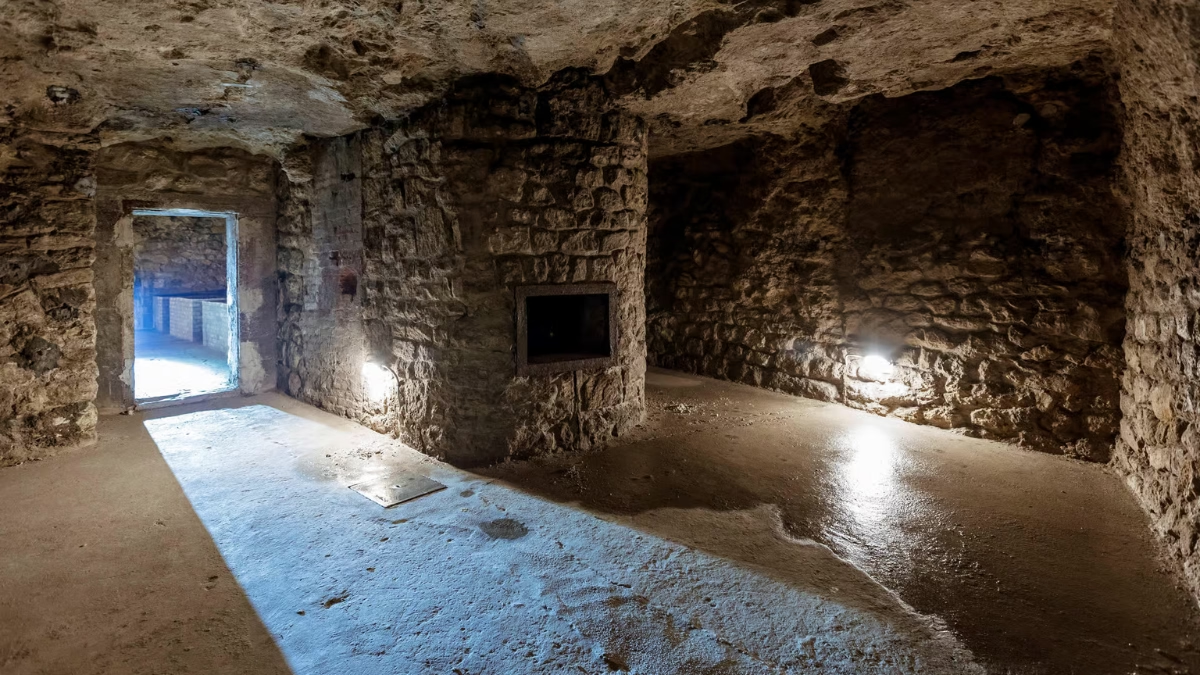
The underground stretch is the core of the experience: roughly 35 minutes inside the Buda Castle Cave system, where the tour visits an authentic bomb shelter and a historic cellar that were used during the siege. Expect the cave atmosphere to be cool and dim year-round, with uneven natural rock passages rather than a polished museum interior — this is a wartime space, not a reconstruction built for display. The guide uses the setting to explain how people actually lived down there for weeks: how families and soldiers packed into narrow chambers, how darkness and cold wore people down, and how the instinct to survive played out in a space with almost no light or comfort. Because the tour is grounded in documented accounts rather than general narration, the underground portion tends to feel more personal and specific than a typical cave walk.
Meeting Point & What to Expect
The tour meets at the De la Motte–Beer Palace on Dísz Square (Dísz tér 15) — look for a guide holding a turquoise umbrella with the Buda Castle Walks logo. It finishes near Trinity Square (Szentháromság tér), by Matthias Church, so the route effectively crosses much of Castle Hill above and below ground.
Arrive at Dísz Square with a few minutes to spare, since the tour departs on a fixed schedule and there is no walk-in alternative to catch up once the group has gone underground. From there, the route heads along Úri Street and Lovas Way before descending into the cave system, finishing up near Matthias Church and Trinity Square — a natural point to continue on to Fisherman’s Bastion or explore the rest of Castle Hill on foot. Wear closed, comfortable shoes: the underground floors are uneven, and the temperature drops noticeably once you leave the street.
Who It’s Suitable For
This tour is not suitable for everyone, and it is worth being honest about that before booking. It is not recommended for children under 14, given both the subject matter and the physical conditions underground, and it is not accessible to wheelchair users or those with significant mobility impairments, since the cave passages are narrow, uneven, and reached by stairs. Anyone with claustrophobia should also think carefully before booking, as the shelter sections are confined, dimly lit, and enclosed for an extended stretch. For visitors who fit those conditions and want a serious, well-told account of Budapest’s wartime history rather than a lighthearted castle walk, this is one of the more distinctive tours on the hill.
How It Differs From the Cave Tour and the Hospital in the Rock
Castle Hill has three underground experiences that are easy to confuse, and they are not the same visit. This tour is built entirely around the 1944–45 siege — the history, the survivor accounts, and the specific bomb shelter and cellar used during that period — with the general cave tour covering the same broader cave network but with a wider focus on the caves’ geology, legends, and centuries of use rather than the war. The Hospital in the Rock, a separate attraction elsewhere under Castle Hill, is a preserved wartime and Cold War-era hospital and bunker complex with its own dedicated ticket and is not part of this tour. If the WWII story specifically is what draws you, this tour is the most direct route to it; if you want the caves in general, the standard cave tour is the better fit; and if you want to see a preserved underground hospital, that requires a separate visit and ticket to the Hospital in the Rock.
Frequently Asked Questions
What does the WWII Siege of Buda Castle & Bomb Shelter Tour cover?
It covers the 1944–45 siege of Budapest, when Soviet forces encircled the German-occupied city and tens of thousands sheltered underground at Buda Castle for 52 days. The guide walks you through the history above ground on Castle Hill, then leads you into an authentic wartime bomb shelter and cellar within the Buda Castle Cave system.
How long does the tour take?
The tour runs about 1.5 hours in total, including roughly 35 minutes inside the underground shelter and cave system. The rest of the time is spent walking the streets of Castle Hill above ground as the guide sets up the history.
Where does the tour start and end?
It starts at the De la Motte–Beer Palace on Dísz Square (Dísz tér 15) — look for a turquoise umbrella with the Buda Castle Walks logo — and finishes near Trinity Square (Szentháromság tér) by Matthias Church.
Is the tour appropriate for children?
It is not recommended for children under 14. The subject matter is serious wartime history, and the underground conditions — confined, dim, uneven ground — are demanding for young children.
Is the tour wheelchair accessible?
No. The tour is not suitable for wheelchair users or people with significant mobility impairments, since it involves stairs and narrow, uneven cave passages. See our accessibility guide for wider Castle Hill options.
Is this the same as the Buda Castle cave tour?
No. This tour is focused specifically on the 1944–45 siege and the bomb shelter used during it, while the general cave tour (see Related Guides below) covers the same tunnel network with a broader focus on the caves themselves rather than the war.
Is this the same as the Hospital in the Rock?
No. The Hospital in the Rock is a separate attraction with its own preserved wartime and Cold War-era hospital and bunker, located elsewhere under Castle Hill, and it requires its own ticket. This tour visits a different section of caves centered on a bomb shelter and historic cellar.
What should I wear or bring?
Wear closed, comfortable shoes for uneven cave floors and cobbled streets above ground, and bring a light layer, since the underground sections are noticeably cool even in summer. There is no strict dress code otherwise.
Can I cancel if my plans change?
Yes. The tour offers free cancellation up to 24 hours before the start time for a full refund. Confirm the exact terms on your chosen date when you book.
Is claustrophobia a real concern on this tour?
Yes, and it is worth taking seriously. The underground sections are enclosed and dimly lit for an extended stretch, and the tour is explicitly not recommended for anyone with claustrophobia.
