

Buda Castle Cave Tour Review: Worth the Underground Walk?
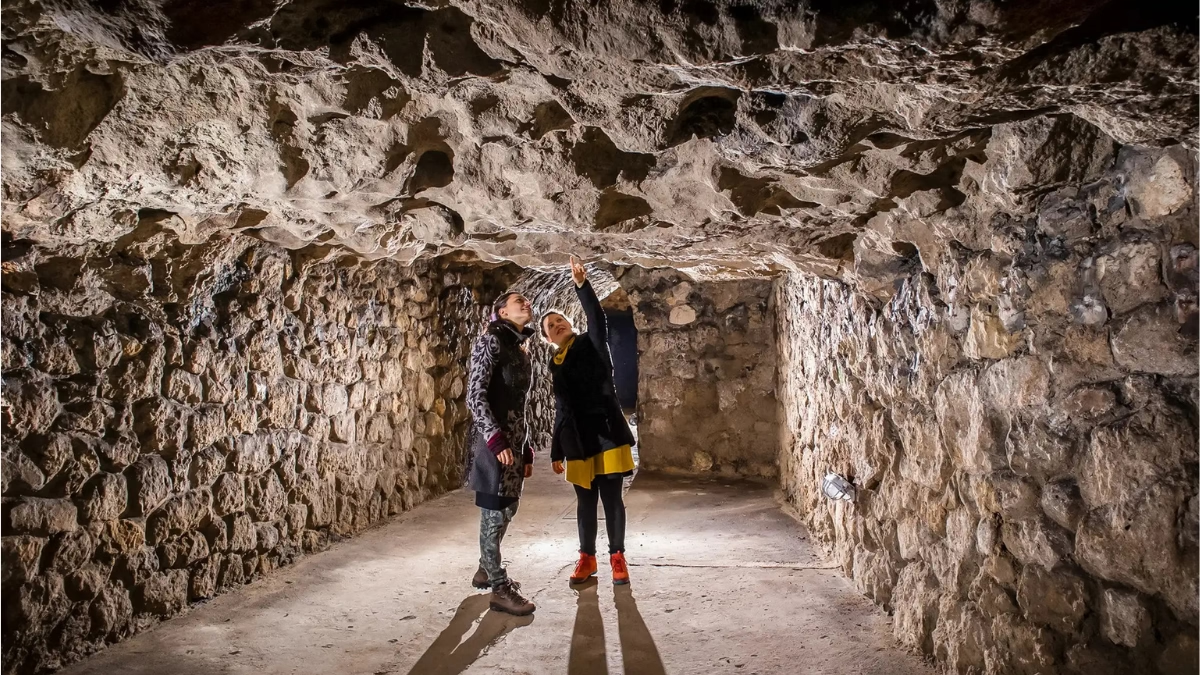
This guided walking tour takes you through part of the natural cave and man-made cellar network under Castle Hill, entering through a wooden door on Dárda utca. It runs as a shorter roughly 40-minute version or a longer 1.5-hour version, covers about 1.5 km on paved, lit paths, and includes a live English-speaking guide. It’s worth booking if you want a real, guided look underground rather than the free viewpoints above; it is not the place for anyone uneasy in tight, dim spaces, and it is not stroller- or wheelchair-accessible.
Castle Hill isn’t only what you see above ground. Underneath the courtyards and terraces of Buda Castle runs a network of natural limestone caves and centuries-old man-made cellars, carved and enlarged over time for wine storage, used as a wartime bomb shelter, and — according to local legend — once a holding place for a notorious prisoner. This tour is one way to get inside that network with a guide who explains what you’re looking at.
This review covers what the tour includes, how long it runs, what the caves actually feel like underground, the meeting point, who it suits, and how it compares to the separate self-guided labyrinth exhibition nearby, so you can decide if it belongs on your Castle Hill itinerary.
What’s Included
The tour includes a live English-speaking guide who leads you through roughly 1.5 km of the cave and cellar network on paved, lit paths, entering via the Dárda utca doorway below Castle Hill. It does not include hotel pickup, food or drinks, and it is separate from any of Buda Castle’s above-ground museums, which are ticketed on their own.
Your guide leads a walk through natural caverns that widen and narrow as you go, connecting to sections of man-made cellar that were cut and extended by hand over centuries. The route is entirely underground and entirely on foot, on paths that are paved and lit rather than raw rock scrambling, so it’s a walk rather than a climb. Along the way the guide covers how the space was used historically — as cool storage for wine, as a sheltering point during wartime bombing, and as the setting for local legend — rather than leaving you to interpret bare stone on your own.
What is included: A live English-speaking guide for a walking route of roughly 1.5 km through the natural cave and man-made cellar network under Castle Hill, entered via the Dárda utca doorway
Duration: Offered in two lengths — a shorter tour of about 40 minutes and a longer version of around 1.5 hours (availability of the longer option varies by season and date)
Cancellation: Free cancellation up to 24 hours before the start time on most bookable dates; check the specific option’s terms when you book, since some date/time combinations are sold as non-refundable
Languages: English
Best for: Visitors who want a guided, informative look at what’s physically under Castle Hill, rather than a self-guided or theatrical labyrinth experience
Book This TourIf your priority is the restored interior of the palace rather than what’s underneath it, the Saint Stephen’s Hall tour is the better fit, and our overview of what’s inside Buda Castle maps out the ticketed museums above ground.
What’s Actually Down There: Caves, Cellars & History
Castle Hill sits on a limestone ridge, and the caves you’ll walk through are a mix of two things: natural cavities that formed in the rock, and cellars that people carved and connected by hand, some dating back roughly 800 years. Historically, the cool, stable underground temperature made the space useful for storing wine, and residents of the hill also expanded parts of it for cellar storage over the centuries. During the 20th century, sections were pressed into service as an air-raid shelter, which is part of why the tunnels run as deep and as far as they do. Local legend also attaches the space to Vlad III (Vlad the Impaler, the historical inspiration for Dracula), said to have been held prisoner in the caves under Castle Hill during the 15th century — a story your guide will likely mention, whether or not you take it as strict history.
What you’ll actually see is a mix of raw limestone chambers — some with visible mineral formations — and worked passages with brick or stone reinforcement where cellars were cut deeper. It’s not a polished museum display; it’s closer to walking through the honest, working underside of the hill, which is part of the appeal for visitors who want something more tactile than a plaque and a viewpoint.
Comfort, Temperature & Footing
Underground temperatures sit in the cool range year-round — expect something in the neighborhood of 12–18°C (54–64°F) depending on the section, noticeably cooler than a Budapest summer day. Paths are paved and lit, but the caves are not wheelchair accessible, are not recommended for those with claustrophobia or mobility limitations, and are generally not suitable for children under about 3.
Bring a light layer even in high summer, since the temperature underground stays well below the outdoor air regardless of the season. Footing is on paved, lit paths rather than loose rock, so sturdy, closed-toe shoes are the main thing to plan for rather than technical gear — though ceilings and passages do narrow in places, so anyone prone to claustrophobia should think carefully before booking. There’s no cell signal underground, so let anyone you’re traveling with separately know you’ll be unreachable for the tour’s duration. The space is genuinely not accessible for wheelchairs or strollers, and operators typically advise against bringing very young children, so if accessibility is a concern for your group, see our accessibility guide before booking.
Meeting Point & Getting There
The tour meets at the cave entrance on Dárda utca, a small street below Castle Hill’s western side, where guides gather guests at a wooden entrance door built into the hillside. The easiest way to find it on foot is to head to Szentháromság tér (Holy Trinity Square) in the heart of Castle Hill, near Matthias Church, and walk down toward Dárda utca from there — it’s a few minutes’ walk, mostly downhill. Bus 16 and 16A/116 both stop near Szentháromság tér, and the funicular up from Clark Ádám tér is another option if you’re combining the cave tour with a walk around the grounds. Build in extra time before your slot, since the entrance is easy to miss on a first pass and you don’t want to be rushing underground.
How It Differs From the Self-Guided Labyrinth
Castle Hill’s underground isn’t a single attraction — there are two separate ways to experience it, and it’s worth knowing the difference before you book. This tour, entered from Dárda utca, is guide-led only: there’s no self-guided option, and the focus is on the caves and cellars themselves with a guide’s commentary. Separately, a different attraction (entered from Úri utca, on the opposite side of the hill) runs as a labyrinth-style exhibition with historical displays, statues, and its own Dracula-legend framing, and it typically offers a self-guided walk-through with marked arrows in addition to guided options. If you specifically want the atmospheric, exhibition-style labyrinth with wax figures and history displays, that’s a different ticket and a different entrance than this walking tour. If you want a straightforward guided walk through real caves and cellars with a knowledgeable guide, this is the more direct option.
Is the Tour Worth It?
If you’re curious about what’s physically underneath Castle Hill and you’re comfortable in enclosed, dimly lit spaces, this tour is a reasonably priced, low-commitment way to see it — the shorter option in particular fits easily around a day spent on the free grounds above. It’s honest rather than flashy: you’re seeing real limestone caverns and old cellar work, not a polished attraction, and the historical framing (wine storage, wartime shelter, the Dracula legend) gives the walk context rather than leaving you looking at bare rock. It’s not worth it if claustrophobia, mobility limits, or traveling with very young children rule it out, or if your priority is the palace’s restored interiors — for that, the Saint Stephen’s Hall tour is the better booking. Our guide on how long to spend at Buda Castle can help you fit the shorter or longer cave option into your overall plan.
Frequently Asked Questions
How long is the Buda Castle Cave Tour?
It’s offered in two lengths: a shorter version of about 40 minutes and a longer version of around 1.5 hours. The longer option isn’t always available on every date, so check what’s bookable for your travel dates.
Where does the tour start?
The meeting point is at the cave entrance on Dárda utca, on the western side of Castle Hill, reached by a short walk down from Szentháromság tér (Holy Trinity Square) near Matthias Church. Check your booking confirmation for the exact meeting instructions before you go.
Is the Buda Castle Cave Tour the same as the Labyrinth exhibition?
No. This tour enters from Dárda utca and is a guided-only walk through natural caves and cellars. The separate Labyrinth exhibition, entered from Úri utca on the other side of the hill, is a different attraction with historical displays and a self-guided option in addition to guided visits.
How cold is it underground?
Underground temperatures stay cool and fairly constant year-round, roughly in the 12–18°C (54–64°F) range depending on the section, noticeably cooler than the surface in summer. Bring a light layer even if it’s hot outside.
Is the cave tour wheelchair accessible?
No, the caves are not wheelchair accessible and the route is generally unsuitable for strollers as well. If accessibility is a concern for your group, check our accessibility guide before booking.
Is the tour suitable for young children?
Operators generally advise against bringing children under about 3, and the tight, dim spaces underground aren’t ideal for toddlers regardless of the stated age limit. Older kids who aren’t bothered by enclosed spaces tend to do fine.
What should I wear or bring?
Closed-toe, comfortable shoes and a light layer for the cooler underground temperature are the main essentials, since the paths are paved but the air is noticeably cooler than outside. There’s no cell signal underground, so let travel companions know in advance if you’ll be out of contact.
Can I cancel if my plans change?
Most dates offer free cancellation up to 24 hours before the start time, though some specific date and time combinations may be sold as non-refundable. Check the cancellation terms shown for your chosen slot before you complete the booking.
Does the tour include any of Buda Castle’s museums?
No. The cave tour is entirely separate from the Hungarian National Gallery, the Budapest History Museum, and Saint Stephen’s Hall, all of which are ticketed on their own. See our Buda Castle ticket prices guide for those.
Is it worth doing alongside the free Castle Hill grounds?
Yes — the free courtyards, terraces, and viewpoints above ground pair naturally with this underground walk, since one shows you the palace and the views while the other shows you what’s beneath it. Many visitors combine the two in a single half-day on Castle Hill.
