

Fisherman’s Bastion Guide: Towers, Views, Hours & Tickets
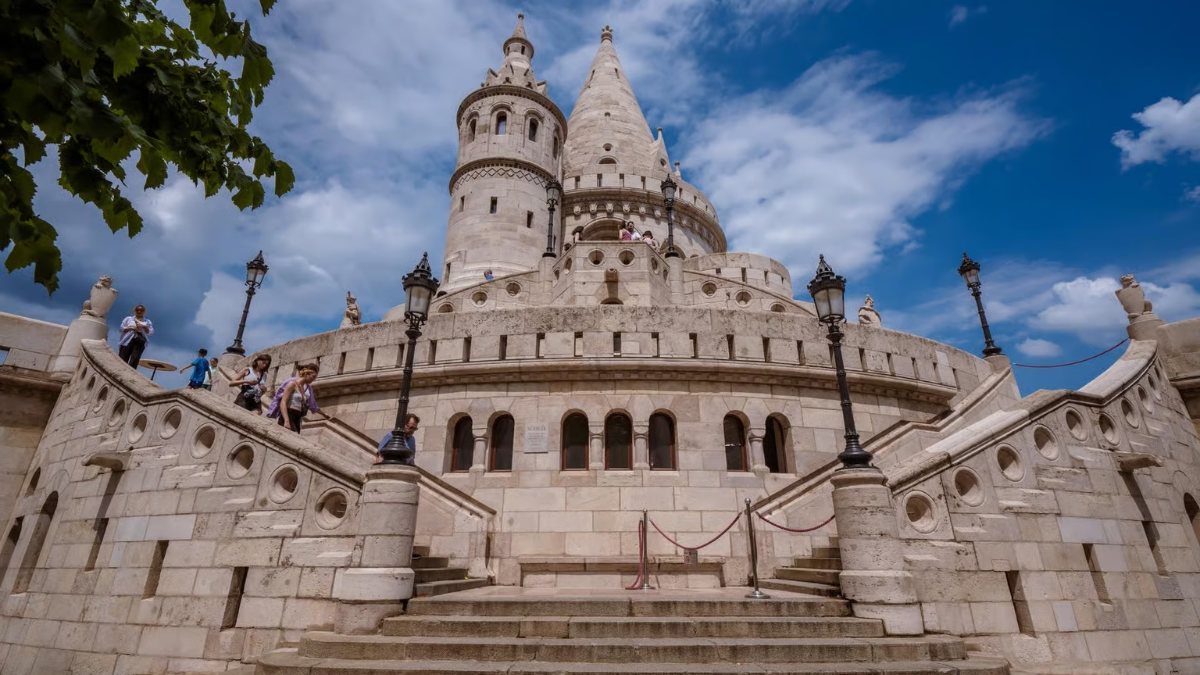
Fisherman’s Bastion (Halászbástya) is the fairy-tale, neo-Romanesque terrace with seven cone-topped towers beside Matthias Church on Castle Hill. Most of it — the lower terraces, staircases, and viewpoints over the Danube and Parliament — is free and open 24/7. Only the upper walkways between the towers require a small paid ticket, and that section keeps seasonal, ticketed hours rather than staying open around the clock.
Fisherman’s Bastion is the single most photographed spot on Castle Hill, and for good reason: its white limestone towers, arcades, and turrets frame one of the best views in Budapest, looking straight across the Danube to the Hungarian Parliament and the rooftops of Pest. It sits right beside Matthias Church, a short and mostly level walk from Buda Castle itself, which makes it an easy add-on to any Castle Hill visit.
Despite how monumental it looks, Fisherman’s Bastion isn’t medieval — it’s a romantic, late-19th-century addition, and most of it costs nothing to visit. This guide covers what’s free versus paid, the seven towers and their history, the best viewpoints, hours, the best time for photos, the on-site café, and how the bastion connects to Buda Castle.
What’s Free vs What’s Paid
The lower terraces, staircases, and the walkway along the outside of the towers are free public space, open 24/7, with no gate or ticket check. Climbing up into and between the seven towers — the upper level, with the little turret staircases and the best elevated angles — requires a paid ticket, sold on-site at a modest per-person fee.
This is the detail that trips up a lot of first-time visitors: Fisherman’s Bastion is not one single ticketed monument. It’s really two layers. The lower terraces and the sweeping open staircase up from Szentháromság tér (Trinity Square) are public space, exactly like the rest of the Buda Castle grounds — you can walk them any time, day or night, for free. From here you already get a wide, largely unobstructed view over the Danube.
The paid part is the upper walkway that threads between and partly inside the seven towers. Buying that ticket gets you a higher vantage point, a closer look at the neo-Romanesque stonework and arcades, and slightly different framing for photos — but it is not required to see the view or to experience the bastion. Ticket booths are on-site; there’s no need to book the upper towers in advance for an individual visit, though it’s worth having small forint notes or a card handy. Combined tours that bundle Fisherman’s Bastion with Matthias Church and a guide, like the Buda Castle Hill Tour, are a convenient option if you’d rather have the history explained than buy the upper-tower ticket separately. For the full breakdown of what costs what across Castle Hill, see our guide to Buda Castle ticket prices.
History: Seven Towers, Seven Tribes
Fisherman’s Bastion looks like it could be centuries old, and that’s the point — it was designed to look that way. It was actually built between 1895 and 1902 by Hungarian architect Frigyes Schulek, the same architect responsible for the major historicist restoration of neighboring Matthias Church, as part of the grand building campaign around Budapest’s 1896 millennial celebrations marking 1,000 years since the Magyar conquest of the Carpathian Basin.
The seven conical towers are the bastion’s signature feature, and they’re symbolic rather than functional: they represent the seven Magyar tribes that settled the region around 895 AD. The neo-Romanesque style — round arches, white stone, turret roofs — was a deliberate choice, evoking a medieval fortress even though no defensive structure of this design ever stood here historically. The name “Fisherman’s Bastion” nods to the medieval guild of fishermen once responsible for defending this stretch of the castle wall above the old fish market by the river below. Despite the make-believe medieval look, the structure suffered real damage in the 1944–45 siege of Budapest, along with the rest of Castle Hill, and was subsequently repaired.
Best Viewpoints
The classic view from Fisherman’s Bastion looks north and east across the Danube to the Hungarian Parliament building, the Chain Bridge, and the rooftops of Pest — arguably the single best Parliament photo spot in Budapest. Both the free lower terrace and the paid upper towers offer this view; the upper level simply adds a bit of height and different framing through the arches.
The main draw is the panorama itself. Standing at the railing on the lower terrace, you’re looking almost directly across the river at the Hungarian Parliament, one of the most photographed buildings in Europe, with the Danube and its bridges laid out below. Turn slightly and you’ll see Margaret Island upriver and, on a clear day, the hills of Buda behind you. The arcaded turrets themselves make excellent foreground framing — shooting through one of the stone arches toward Parliament is the single most reproduced Fisherman’s Bastion photo, and you don’t need the paid upper-tower ticket to get it from most angles.
For a broader look at Castle Hill’s viewpoints beyond the bastion, including angles from the palace terraces themselves, see our guide to Buda Castle’s grounds and panoramas.
Hours: Free Terraces vs Ticketed Towers
The lower terraces and staircases are open 24/7, year-round, at no cost. The paid upper towers run on seasonal, daytime hours — generally open longer in the warmer months and shorter (or sometimes closed) in winter — so the ticketed section should not be assumed to be open at night or very early in the morning.
Because Fisherman’s Bastion sits on open public ground, the lower level never closes and there’s no admission gate to pass through — you can visit at 5 AM or 11 PM and see the same free view. The upper-tower ticket booths, by contrast, operate on set daytime hours that shift with the season, typically opening through the morning and closing by early evening, with reduced hours in winter. If reaching the very top of the towers matters to you, plan your visit within standard daytime hours and check the current schedule on-site or via the official Castle Hill visitor information, since exact times can change with the season and with events on the hill. Our broader guide to Buda Castle’s opening hours covers how this free-grounds-versus-ticketed-hours pattern plays out across the whole hill.
Best Time for Photos
Sunrise is the best time to photograph Fisherman’s Bastion — the light is golden, the crowds haven’t arrived yet, and the upper towers are frequently still free to access before ticket booths open. Midday is the most crowded and least flattering light; sunset and the hour after are a lively second option.
Because Fisherman’s Bastion is one of the most visited spots in Budapest, timing matters as much as composition. Arrive close to sunrise and you’ll often find the terraces nearly empty, with soft golden light raking across the white stone and the city waking up across the river — and since the upper-tower ticket booths aren’t staffed that early, that upper level can sometimes be walked for free before opening hours (this isn’t guaranteed and can change, so treat it as a bonus rather than a plan). By mid-morning, tour groups and day-trippers arrive in force, and by midday the terraces can feel genuinely packed, with harsh overhead light that flattens the view. Sunset draws a different, more festive crowd and is worth it for the changing sky, though it’s rarely as quiet as dawn. After dark, the bastion and Matthias Church are both floodlit, which makes for a striking but very different, more atmospheric set of photos than the daytime shots.
The Café: Halászbástya Restaurant
Built into the bastion itself is the Halászbástya restaurant, an upscale dining spot with a terrace that shares the same panoramic view over the Danube and Parliament. It’s a genuine sit-down restaurant rather than a casual café — think tablecloths and a full menu of Hungarian and international dishes — so it suits a proper meal or a splurge coffee with a view rather than a quick snack. Prices reflect the location and the view as much as the food, which is worth knowing before you sit down. If you just want a coffee or gelato without the restaurant prices, the streets around Szentháromság tér and the walk back toward Buda Castle have several more casual, budget-friendly options.
How It Relates to Buda Castle
Fisherman’s Bastion is not part of the Buda Castle palace complex itself, but the two sit on the same ridge and are easy to combine. From the bastion, it’s roughly a 10- to 15-minute walk south along Castle Hill to the palace grounds and its terraces, passing Matthias Church, Szentháromság tér, and a run of shops and viewpoints along the way. The walk is mostly level or gently sloped rather than a steep climb, since you’re already up on the hill by the time you reach the bastion. Many visitors do both in a single outing — starting at the bastion and Matthias Church, then walking to the palace for the museums or simply for the grounds and views — and several guided tours are built around exactly that route. For getting up to Castle Hill in the first place, from either direction, see our guide on getting to Buda Castle.
Practical Tips
- Free doesn’t mean empty. The lower terraces cost nothing but are also the most crowded part of Castle Hill at midday — arrive early or late for a calmer visit.
- Cobbles and slopes. The bastion’s staircases and surrounding streets are cobbled and uneven in places, which matters for strollers, wheelchairs, and anyone with mobility concerns; sturdy, flat shoes help.
- Beside, not inside, Matthias Church. Fisherman’s Bastion and Matthias Church are separate ticketed entities standing side by side — a ticket to one does not include the other.
- Don’t skip the free view for the paid one. If you’re on a tight budget or short on time, the free lower terrace delivers the same essential panorama as the upper towers.
- Bundle it with a guide if you want the history. The symbolism of the seven towers and Schulek’s design choices are easy to miss without context; a guided Castle Hill tour fills that in.
- Watch for street vendors and unofficial “guides.” Around any major Budapest sight, including here, be wary of anyone pressuring you into an unofficial tour or souvenir purchase.
Frequently Asked Questions
Is Fisherman’s Bastion free to visit?
The lower terraces, staircases, and the outer walkway are free and open 24/7. Only the upper level between the seven towers requires a paid ticket, purchased on-site.
How much does the Fisherman’s Bastion ticket cost?
The upper-tower ticket is a modest, per-person fee, generally cheaper than a museum admission inside Buda Castle. Prices can change, so confirm the current rate at the on-site ticket booth or the official Castle Hill visitor information before you go.
What are Fisherman’s Bastion’s opening hours?
The free lower terraces never close. The paid upper towers keep seasonal daytime hours, typically longer in summer and shorter in winter, so plan a daytime visit if reaching the top matters to you.
Why does Fisherman’s Bastion have seven towers?
The seven towers represent the seven Magyar tribes that settled the Carpathian Basin around 895 AD. They were designed by architect Frigyes Schulek as a symbolic, romantic reference to Hungary’s founding rather than as a working fortification.
Is Fisherman’s Bastion actually medieval?
No. Despite its castle-like, neo-Romanesque design, it was built between 1895 and 1902 for Hungary’s millennial celebrations. No defensive structure in this design ever stood here in the medieval period, though the site itself was part of the old castle wall.
What’s the best time to photograph Fisherman’s Bastion?
Sunrise, for golden light and near-empty terraces well before the day’s crowds and tour groups arrive. Sunset is a lively second choice, while midday is the most crowded and least flattering for photos.
How do I get from Fisherman’s Bastion to Buda Castle?
It’s roughly a 10- to 15-minute walk south along Castle Hill, past Matthias Church and Szentháromság tér, on mostly level or gently sloped streets. No funicular or bus is needed for that short connecting walk.
Is there a restaurant at Fisherman’s Bastion?
Yes, the Halászbástya restaurant sits within the bastion with a terrace overlooking the Danube and Parliament. It’s an upscale, sit-down restaurant, so prices are higher than a typical café — a good option for a special meal with a view rather than a quick coffee.
Do I need to book Fisherman’s Bastion tickets in advance?
Individual visitors usually don’t need to pre-book the upper-tower ticket; it’s sold on-site. If you’d rather have a guide and skip figuring out logistics yourself, a combined Castle Hill tour covering the bastion and Matthias Church can be booked ahead.
Is Fisherman’s Bastion crowded?
Yes, especially the free lower terraces at midday and in peak season — it’s one of the most visited spots in Budapest. Early morning, particularly around sunrise, is consistently the quietest window.
