

How Long to Spend at Buda Castle: Half-Day vs Full-Day Guide
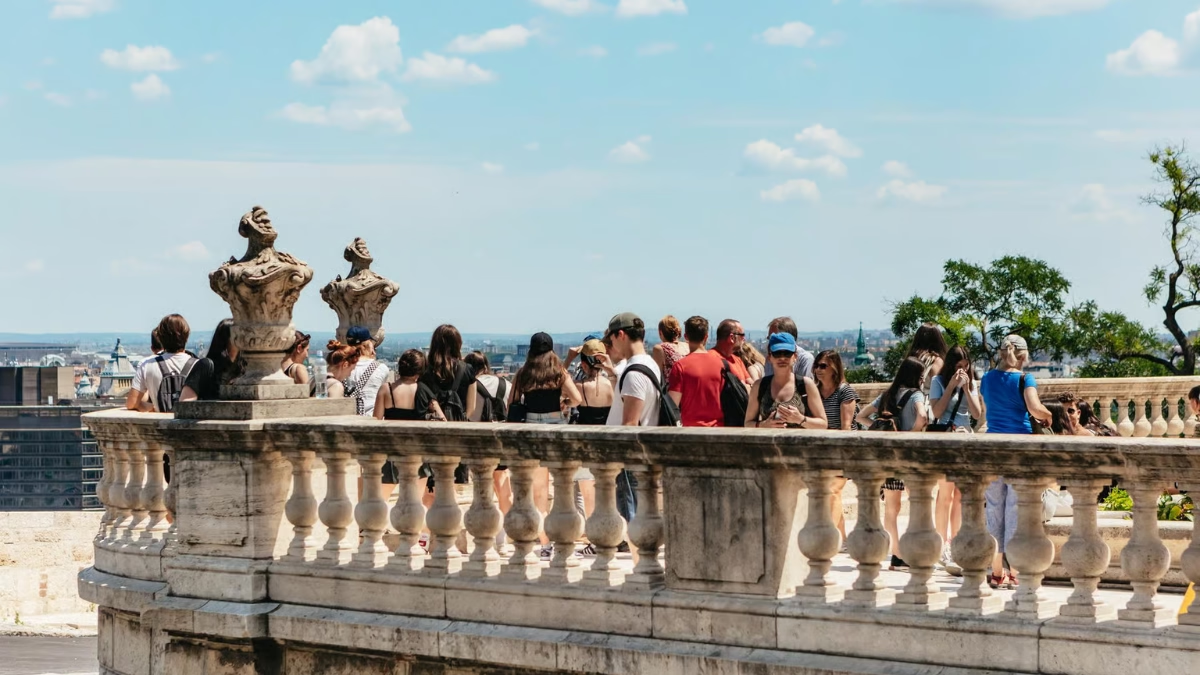
Budget about an hour for a quick stop at the free grounds and viewpoints, three to four hours for a half-day that adds one museum or the Saint Stephen’s Hall tour, and a full day (six-plus hours) if you want both museums, Fisherman’s Bastion, Matthias Church, and the underground labyrinth. How long you need mostly comes down to how many of the ticketed interiors you want to see, not how big the hill itself is.
Buda Castle can be a 45-minute photo stop or an all-day outing, and both are legitimate ways to visit. The grounds, courtyards, and terraces are free and open around the clock, so a quick pass-through costs nothing and takes very little time. The museums inside — the Hungarian National Gallery, the Budapest History Museum, and the guided-only Saint Stephen’s Hall — are what add real hours to the visit, and Castle Hill’s other landmarks, Fisherman’s Bastion and Matthias Church, sit just outside the palace walls and are easy to fold into a longer day.
This guide breaks down exactly how long each part takes, gives sample itineraries for a quick stop, a half-day, and a full day, and covers the scheduling details — Monday closures, last-entry times, and how to pair the castle with its neighbors — that determine whether your plan actually fits.
Time Budgets at a Glance
| Visitor type | Time needed | What’s included |
|---|---|---|
| Quick stop | About 1 hour | Grounds, courtyards, and viewpoints only — free |
| Half-day | 3–4 hours | Grounds + one museum, or grounds + the Saint Stephen’s Hall tour |
| Full day | 6+ hours | Both museums, grounds, Fisherman’s Bastion, Matthias Church, and the labyrinth |
These are comfortable, unhurried estimates. Add extra time for lines at busy midday hours, for a sit-down lunch on Castle Hill, or if you’re traveling with young children who need more breaks.
How Long Each Part Actually Takes
The grounds take about an hour to walk at a relaxed pace. Each museum needs 1.5 to 3 hours depending on how thoroughly you go through it, the Saint Stephen’s Hall tour runs about 1.5 hours, and Fisherman’s Bastion adds another 30 to 45 minutes just outside the palace.
Knowing the individual pieces lets you build a schedule that actually fits your day, rather than guessing. Here’s what to expect from each:
- The grounds, courtyards, and terraces (~1 hour). This covers walking the main courtyards, the Matthias Fountain, the Habsburg Steps, and the terrace viewpoints over the Danube and Pest. It’s free and never closes, so you can also split it — a short pass on arrival and a longer look at sunset. See our guide to the grounds and best viewpoints for where to stand.
- Hungarian National Gallery (2–3 hours). The largest single attraction inside the palace, spanning several floors of Hungarian art from medieval altarpieces to 20th-century painting. Art lovers can easily spend a full morning; a focused visit hitting the highlights takes closer to two hours. Details are in our Hungarian National Gallery guide.
- Budapest History Museum (1.5–2 hours). Also called the Castle Museum, it traces the palace and city’s history through the medieval royal chambers and excavated remains beneath the current building. It’s smaller than the National Gallery but still merits well over an hour to do justice to the underground medieval level. See our Budapest History Museum guide.
- Saint Stephen’s Hall guided tour (~1.5 hours). The reconstructed ceremonial royal hall is seen only on a timed guided tour, not open walk-in entry, and the tour itself runs about 90 minutes including the group assembly and access to the hall. Because slots are timed, this one needs to be booked or planned around a specific hour of your day — see our Saint Stephen’s Hall Tour review.
- Fisherman’s Bastion (30–45 minutes). A short walk from the palace, this is a quick but worthwhile stop for its turrets and one of the best Danube-and-Parliament views in the city. Longer if you climb the paid upper towers or want photos without crowds.
- Matthias Church (30–45 minutes). Next door to Fisherman’s Bastion, the church’s colorful roof tiles and interior are worth a stop of similar length; add more if you’re visiting during a service or want to linger over the interior details.
- The underground labyrinth (45–60 minutes). A separate ticketed attraction beneath Castle Hill, the tunnels and caves are a distinct experience from the palace museums and add close to an hour on their own.
The Quick Stop: About 1 Hour
If you only have an hour, walk the free grounds — the courtyards, the Matthias Fountain, and the terrace overlooking the Danube — without entering any of the museums. It costs nothing and delivers the views that make Castle Hill worth the trip.
This is the right plan if Buda Castle is a stop on a packed sightseeing day, if you’re passing through on the way to or from Fisherman’s Bastion and Matthias Church, or if you simply want the postcard views without committing to a museum visit. Walk in from the funicular or bus stop, cross the main courtyard, take in the Matthias Fountain and the equestrian statues, and spend most of your time on the terrace with the panorama over the Chain Bridge, the Danube, and Parliament. Because the grounds are open 24 hours, this quick stop works at any time of day — early morning and evening are actually the quietest and most photogenic. It’s also the only version of the visit that costs nothing, since only the interiors are ticketed.
The Half-Day: 3–4 Hours
A half-day pairs the free grounds with one ticketed attraction — either the Hungarian National Gallery, the Budapest History Museum, or the Saint Stephen’s Hall guided tour — for a well-rounded but unhurried visit of three to four hours.
This is the most popular option for travelers who want more than a photo stop but don’t want to give up a full day of their Budapest trip. A typical half-day looks like this:
- Arrive at Castle Hill (funicular, bus 16, or on foot) and spend 30–45 minutes on the grounds and terraces.
- Visit one museum: the Hungarian National Gallery (2–3 hours) for art, or the Budapest History Museum (1.5–2 hours) for the palace’s own history, or book the Saint Stephen’s Hall tour (1.5 hours) for the single most photogenic interior.
- Finish with a coffee or light lunch on Castle Hill and a last look at the viewpoints before heading back down.
If your priority is the interiors rather than art or archaeology specifically, the Saint Stephen’s Hall tour is the shortest of the three options and pairs comfortably with a slightly longer walk of the grounds. Our guide to what’s inside Buda Castle compares all the ticketed attractions if you’re still deciding which one to pick, and the ticket prices guide covers what each option costs.
The Full Day: 6+ Hours
A full day covers both museums, the Saint Stephen’s Hall tour if you want it, Fisherman’s Bastion, Matthias Church, and possibly the underground labyrinth — six hours or more once you factor in walking between sights and a meal break.
This is the plan for history and architecture enthusiasts, first-time visitors who want to see everything Castle Hill offers, or anyone building an entire day of their trip around this neighborhood. A sample full-day itinerary:
- Morning: Arrive early (museums open at 10 AM) and start with the grounds and terraces while they’re quiet, then go straight into the Hungarian National Gallery (2–3 hours) when it opens.
- Midday: Break for lunch on Castle Hill, then visit the Budapest History Museum (1.5–2 hours).
- Afternoon: Walk over to Fisherman’s Bastion (30–45 minutes) and Matthias Church (30–45 minutes) — both are a short walk from the palace and pair naturally together.
- Late afternoon: If time and energy allow, add the underground labyrinth (45–60 minutes) as a change of pace from the museums, or return to the terraces for golden-hour views before heading back down.
Realistically, fitting all of this in means a full day dedicated largely to Castle Hill, with limited room for much else in Budapest that day. If you’d rather see everything without cramming, consider splitting it across two visits and prioritizing based on your interests. For the neighboring landmarks in more depth, see our guides to Fisherman’s Bastion, Matthias Church, and the underground labyrinth.
Practical Scheduling: Monday Closures and Timing
The Hungarian National Gallery and Budapest History Museum are closed on Mondays, so a museum-heavy half-day or full day should be scheduled Tuesday through Sunday. The grounds, Fisherman’s Bastion’s lower level, and Matthias Church’s exterior stay accessible every day, including Mondays.
The single biggest scheduling pitfall is planning a museum visit for a Monday. Both the Hungarian National Gallery and the Budapest History Museum close that day, which means a half-day or full-day plan built around them simply won’t work — you’d be left with only the free grounds and the outdoor neighbors. If Monday is your only available day on Castle Hill, treat it as a quick-stop or grounds-plus-neighbors day instead, and see our opening hours guide for the full weekly and seasonal schedule.
A few other timing notes worth building into your plan:
- Last entry to the museums is typically 30 to 60 minutes before closing, so don’t arrive at 5:30 PM expecting a full visit.
- Saint Stephen’s Hall tours run on set time slots, not walk-in entry, so book your slot first and build the rest of the day’s schedule around it.
- Winter hours shrink. Museums often reduce their hours from roughly November through February, which can tighten a full-day itinerary; check current times before you go.
- Midday is busiest, especially on weekends and in high season. If your schedule allows it, starting right at opening or visiting in the late afternoon spreads out the crowds.
- Combine with lunch. Castle Hill has cafes and restaurants scattered through the district, so a half-day or full-day visit can naturally include a sit-down meal without leaving the hill.
Combining Buda Castle with Nearby Sights
Fisherman’s Bastion and Matthias Church sit a short walk from the palace and are the easiest additions to any Buda Castle visit; the underground labyrinth is a separate ticketed attraction that fits well into a full day. Beyond Castle Hill, the Chain Bridge and central Pest are also within reach if you have energy left.
Because Castle Hill is compact, it’s easy to extend a Buda Castle visit into a broader Castle Hill day without much extra travel time. Fisherman’s Bastion and Matthias Church are the natural pairing — both are a few minutes’ walk from the palace grounds and are commonly visited back-to-back. The underground labyrinth is a bit further afield in feel, since it’s a cave and tunnel system rather than a building, but it’s still within easy walking distance and makes a good change of pace after two museums. If you have time and energy beyond Castle Hill itself, the walk down to the Chain Bridge and across into Pest is a scenic way to end the day, though that starts to stretch beyond a single “Buda Castle” visit into a broader Budapest itinerary. For more on planning the wider trip, our complete FAQ page rounds up common questions from first-time visitors.
Frequently Asked Questions
How long does it take to see Buda Castle?
It depends on what you mean by “see.” A quick walk of the free grounds takes about an hour, a half-day with one museum runs three to four hours, and a full day covering both museums plus Fisherman’s Bastion and Matthias Church takes six hours or more.
Is one hour enough for Buda Castle?
One hour is enough to walk the free grounds, courtyards, and terrace viewpoints, which is a complete experience in itself. It is not enough time to also visit a museum or take the Saint Stephen’s Hall tour, since those each need 1.5 hours or more on their own.
How long should I spend in the Hungarian National Gallery?
Plan for two to three hours. A focused visit hitting the main collections takes closer to two hours, while art enthusiasts who want to see most of the museum’s floors should allow closer to three.
Is half a day enough to see Buda Castle?
Yes, for most visitors. A half-day of three to four hours comfortably covers the grounds plus one ticketed attraction — either the Hungarian National Gallery, the Budapest History Museum, or the Saint Stephen’s Hall guided tour.
Do I need a full day for Buda Castle?
Only if you want to see both museums plus the neighboring sights like Fisherman’s Bastion, Matthias Church, and the underground labyrinth. If you’re happy picking one museum or interior, a half-day is enough.
Can I do Buda Castle and Fisherman’s Bastion in one visit?
Yes, easily. Fisherman’s Bastion is a short walk from the palace grounds and takes only 30 to 45 minutes, so it fits naturally onto the end of either a half-day or full-day Buda Castle visit.
Is Buda Castle open on Mondays?
The grounds are open every day, including Mondays, but the Hungarian National Gallery and Budapest History Museum are both closed on Mondays. Plan museum visits for Tuesday through Sunday, and treat a Monday trip as a grounds-and-neighbors day.
How long is the Saint Stephen’s Hall tour?
The guided tour runs about 1.5 hours, including group assembly and time inside the hall. Because it’s a timed tour rather than walk-in entry, book your slot in advance and plan the rest of your visit around it.
What’s the minimum time to see the highlights?
If you only have an hour, prioritize the free grounds and terrace views, since they cost nothing and deliver the classic Buda Castle experience. With two to three hours, add one museum or the Saint Stephen’s Hall tour for a more complete visit.
Should I visit Buda Castle in the morning or afternoon?
Morning is best for a museum-heavy visit, since you can start at the 10 AM opening and have the fullest day ahead of you. Afternoon and evening suit a shorter grounds-only visit well, especially for quieter crowds and better light for photos.
